Is The Wien Museum Free?
The Wien Museum's permanent exhibition is free every day, and every site is free on the first Sunday of the month. Here is exactly what is free, what a ticket costs, and what is inside.
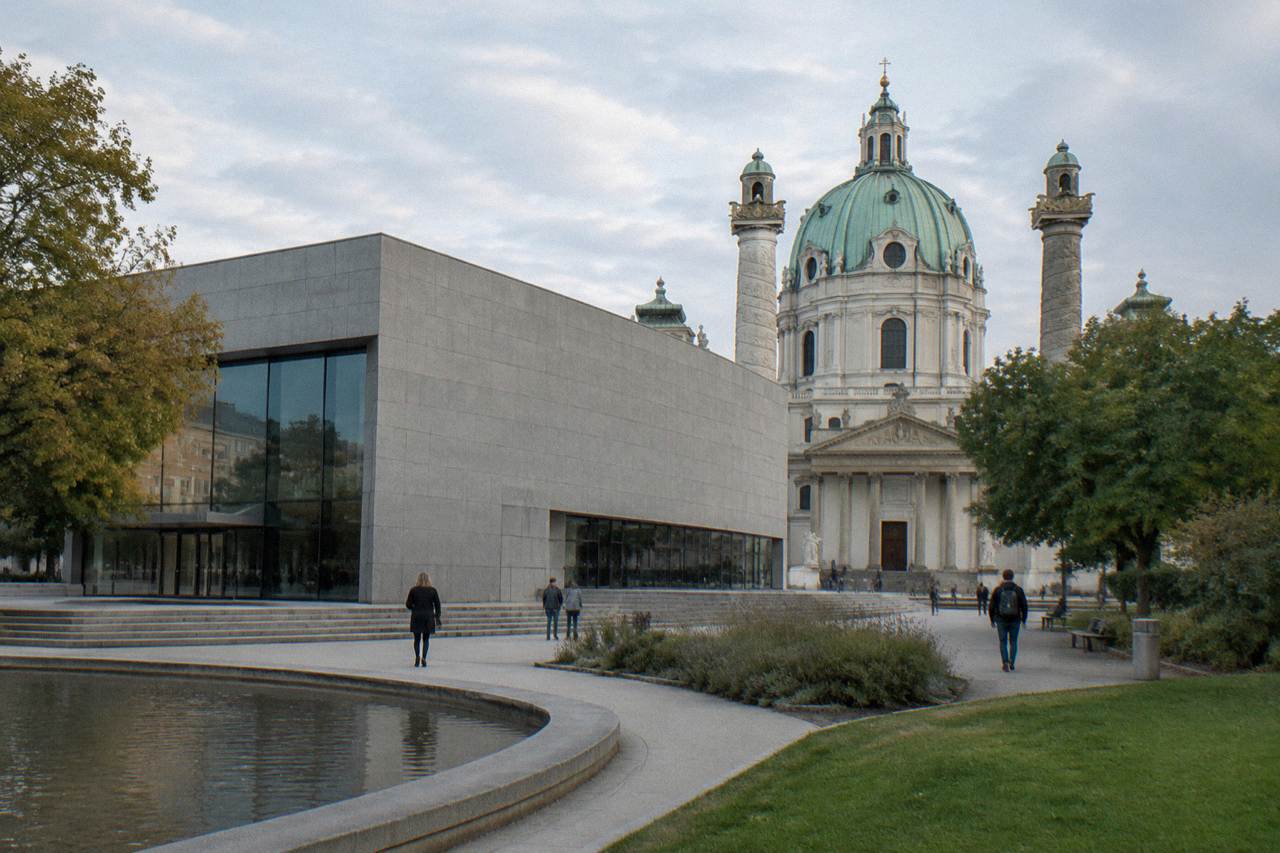
Yes, in the most useful sense of the word: the permanent exhibition at the Wien Museum's Karlsplatz main site, called "Vienna. My History", is free of charge for everyone on every opening day, and no ticket is needed to walk in. The museum's special exhibitions and its smaller satellite sites still charge admission on ordinary days, but every one of them drops the ticket price to zero on the first Sunday of each month, and under-19s are always free.
That is the honest version of the answer, and it is the version most short summaries leave out. Plenty of pages will tell you "the Wien Museum is free" and stop there, which is only true for one floor of one building on most days. The Wien Museum is not a single museum but a family of fifteen sites scattered across the city, from the Karlsplatz headquarters to the Hermesvilla out in the Lainzer Tiergarten, and each of those sites has its own ticket, its own hours and its own free windows. Getting the structure straight is the difference between walking into the right building for free and standing at a counter with a EUR 9 ticket in front of you.
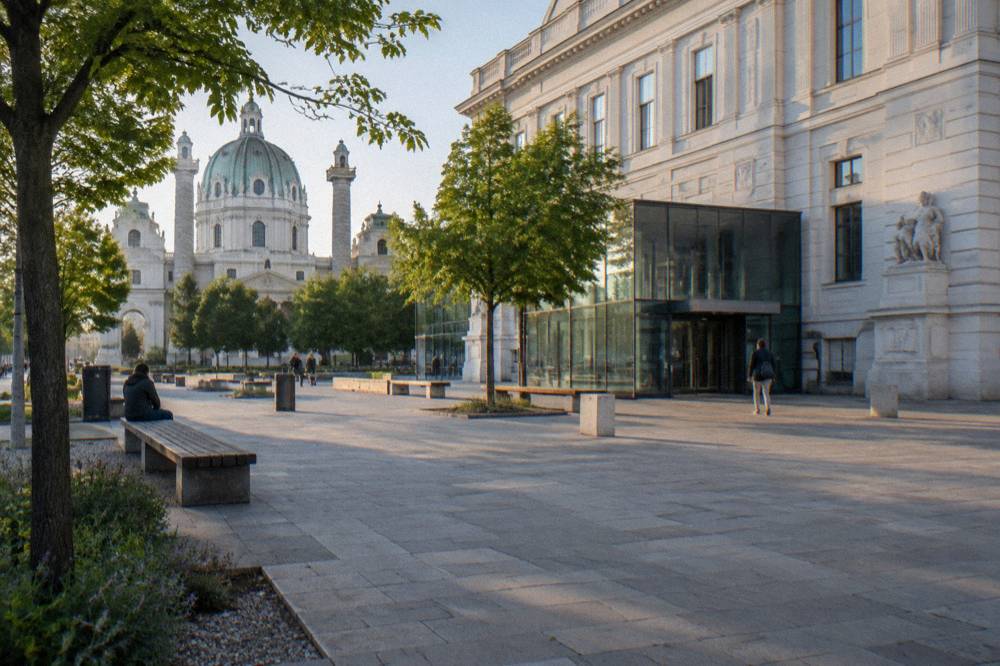
The free parts are genuinely worth having, though. The permanent exhibition at Karlsplatz covers the city's history from its Roman origins to the present, it sits directly on the Karlsplatz transport hub next to the Resselpark, and it costs nothing on a Tuesday afternoon in February or a Saturday in August alike. The city's cultural department publishes the free-admission rules on its own pages, and the museum confirms them on its visitor information page, which is the source for every price and rule quoted here. There is a separate guide to the first Sunday free museum days in Vienna that covers the whole monthly scheme across the city if you want the wider picture.
One thing worth knowing before you plan around the free entry: the museum is also a natural pairing with a free walking tour, because most of its satellite sites sit in exactly the quarters the tours cover. Twelve free walking tours run in Vienna, listed on GuruWalk and freetour.com, and several of them start within a few hundred metres of a Wien Museum site. The Römermuseum sits under Hoher Markt, where the Jewish Traces walk begins; the Virgilkapelle lies beneath Stephansplatz, a short walk from the Stephansdom stops on the classic tours; and the Otto Wagner Pavillon stands on Karlsplatz itself, next to the main museum. If you also want a guide, Part 1 Highlights, Redandwhite Tours is a free walk to pair with it.
Is Any Part Free Or Free On A Certain Day?
Three free layers exist. First, the permanent exhibition at Karlsplatz is free every day, with no ticket at all. Second, musa, the Wien Museum's contemporary art venue on Felderstraße, is free every day too. Third, on the first Sunday of every month, every Wien Museum site, permanent and special exhibitions included, is free for everyone, and under-19s are free at all of them on every day of the year.
The every-day free layer is the one most visitors can use without any planning. The Karlsplatz permanent exhibition needs no booking, though the museum notes that queues are possible, so a short wait at busy times is part of the deal. The musa venue, which shows contemporary art from the city's collection, works the same way. Between those two, a visitor with no budget at all can see a full history exhibition and a rotating contemporary programme on any afternoon the museums are open.
The first-Sunday layer is the city's own scheme, and it is broader than most people expect. On the first Sunday of each month, free entry covers the permanent and special exhibitions at all Wien Museum locations: Karlsplatz, Hermesvilla, Römermuseum, Pratermuseum, Uhrenmuseum, Beethoven Museum, Haydnhaus, Otto Wagner Kirche am Steinhof, Beethoven Pasqualatihaus, Neidhart Festsaal, Schubert Geburtshaus, Johann Strauß Wohnung, Otto Wagner Hofpavillon Hietzing, Otto Wagner Pavillon Karlsplatz and the Virgilkapelle. That is a lot of museum for a single free day, and no single person could see it all between opening and closing, so the practical move is to pick two or three sites that share a district. The city's culture department documents the scheme on its free museum pages, and the museum states the same rule on its visitor information page.
Two boundaries matter, because the scheme is often misreported. The first-Sunday rule belongs to the Wien Museum's own sites only: it does not extend to the federal museums, to the Secession, which is free on the first Wednesday instead, or to Kunsthalle Wien, which is free on the last Sunday and runs a pay-what-you-can window on Thursday evenings. And the under-19 free rule is not a blanket city rule either: the Wien Museum, the Kunsthistorisches Museum, the Naturhistorisches Museum, the Albertina, the MAK, the Belvedere, mumok, Kunsthalle Wien, the Imperial Treasury and the Jewish Museum Vienna all state free under-19 entry on their own pages, but the Leopold Museum charges under-19s EUR 2.50, Kunst Haus Wien charges EUR 7 up to 18, and the Dom Museum Wien charges children from 6 to 18 EUR 3. A free walk worth pairing with this: Meet The Locals Walk.
| Free window | What it covers | Who it applies to | Days it works |
|---|---|---|---|
| Permanent exhibition, Karlsplatz | The "Vienna. My History" exhibition | Everyone, no ticket | Every opening day |
| musa, Felderstraße 6-8 | Contemporary art venue | Everyone | Every opening day |
| First Sunday of the month | Permanent and special exhibitions at all 15 Wien Museum sites | Everyone | First Sunday each month |
| Under-19 rule | All Wien Museum sites | Visitors under 19 | Every opening day |
One planning note for the satellite sites: the museum has adjusted some site hours under budget measures, with certain satellites open Friday to Sunday only and some composer sites temporarily closed for renovation, and the Hermesvilla shows a winter break notice. Check the site you want on the museum's own pages before travelling across town for it.
What Does A Ticket Cost?
On ordinary days, the paid parts of the Wien Museum cost EUR 13 or EUR 9 regular depending on the exhibition, with reduced prices of EUR 11 or EUR 7. The five big satellite museums charge EUR 9 regular and EUR 7 reduced, and the nine smaller sites charge EUR 6 and EUR 5. Under-19s pay nothing, and the first Sunday of the month removes every one of these prices.
The two-tier pricing at Karlsplatz reflects the two kinds of show the building runs. Special exhibitions are ticketed at EUR 13 regular, EUR 11 reduced, or EUR 9 regular, EUR 7 reduced, depending on the exhibition, while the permanent collection next door stays free. That means a visit to the main site can cost anything from nothing, if you skip the special show, to EUR 13, if you want both under one roof. The museum's own visitor information page is where these figures are published, and it is the page to re-check before a visit, because exhibition pricing changes with the programme.
The satellite prices are flat and simple, which helps when you are stringing several sites together. The smaller composer and architecture sites cost EUR 6 regular and EUR 5 reduced, and several of them sit in apartment buildings. The Beethoven Pasqualatihaus, the Haydnhaus and the Schubert Geburtshaus are all residential buildings where the composers actually lived, and the Virgilkapelle is a medieval chapel underground beneath Stephansplatz, reached through the station. If you also want a guide, Top Sights, Multilingual Guide is a free walk to pair with it.
| Wien Museum site | Regular price | Reduced price |
|---|---|---|
| Karlsplatz special exhibitions (upper tier) | EUR 13 | EUR 11 |
| Karlsplatz special exhibitions (lower tier) | EUR 9 | EUR 7 |
| Beethoven Museum, Hermesvilla, Pratermuseum, Römermuseum, Uhrenmuseum | EUR 9 | EUR 7 |
| Haydnhaus, Beethoven Pasqualatihaus, Otto Wagner Pavillon Karlsplatz, Virgilkapelle and the other small sites | EUR 6 | EUR 5 |
| Karlsplatz permanent exhibition and musa | Free | Free |
For comparison, because the Wien Museum's prices only look cheap next to its neighbours: the Kunsthistorisches Museum charges EUR 22 online and EUR 24 on site for adults, the Albertina charges EUR 20.90, the mumok EUR 18 and the Leopold Museum EUR 19. Even the Wien Museum's top special-exhibition ticket of EUR 13 undercuts every one of them, and the free layers undercut everything. A fuller comparison of free and cheap museums across the city is in the free museums in Vienna guide.
If you are combining the museum with a walk through the same quarter, the Römermuseum is the natural bridge. It sits under Hoher Markt, beside the Ankeruhr, and it is one of the EUR 9 sites that drops to free on the first Sunday. Hoher Markt is also the meeting point for one of the highest-rated free walks in the city, which makes the pairing easy. Pair this with a free walk: Jewish Traces, Hitler's Vienna.
What Is Inside?
The Karlsplatz permanent exhibition shares its building with the ticketed special shows. The satellites are narrower: two Beethoven apartments, the Haydnhaus, the Schubert Geburtshaus, the Johann Strauß Wohnung, a clock museum, a Roman museum, a Prater museum, the Hermesvilla, three Otto Wagner buildings and the underground Virgilkapelle, each holding a single, focused story.
The main building's free exhibition is the anchor, and it is a real city museum rather than a token room: three floors of objects, models and rooms that walk you through how Vienna became Vienna, from the Roman military camp at the city's core to the interwar housing programme and beyond. Because it is free and centrally placed, it works as a rainy-day default or as the orientation stop on a first day, and the museum's own framing, "Vienna. My History", is accurate: it is the city talking about itself. The wider set of guides lives on Free Things To Do In Vienna.
The music sites are the emotional core of the satellite network, and they are unusual among city museums in that they are mostly real homes. The Beethoven Museum in the 19th district and the Beethoven Pasqualatihaus near the Freyung both occupy buildings the composer lived in, the Haydnhaus was Haydn's own house, and the Schubert Geburtshaus is the apartment where Schubert was born. None of these is large; a visit is a set of rooms, original instruments and documents rather than a full day out, which is exactly why they suit the EUR 6 ticket and the first-Sunday free entry.
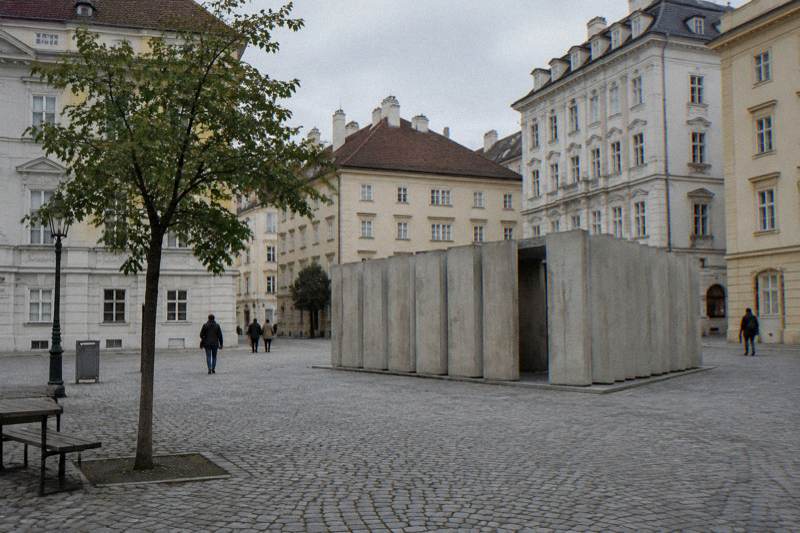
The Römermuseum deserves its own paragraph because of where it sits. The museum is built into the ground beneath Hoher Markt. The square above it is home to the Ankeruhr, the Art Nouveau clock whose figures parade daily at 12 pm, and it is the meeting point for the Jewish Traces walk. That tour, Jewish Traces, Hitler's Vienna by redandwhite.tours, is a free, pay-what-you-want GuruWalk rated 4.88 out of 5 across 2,513 English-language GuruWalk reviews, it runs about 2 hours in English, and its route covers Hoher Markt, the Judengasse, Seitenstettengasse, Morzinplatz, the Judenplatz Holocaust Memorial and Heldenplatz. The Judenplatz Holocaust Memorial itself is publicly accessible at no charge, so a first-Sunday visit to the Römermuseum followed by the walk covers two layers of the same quarter's history for the price of whatever you choose to pay the guide. A free walk worth pairing with this: Good Vienna Tours, Classic Highlights.
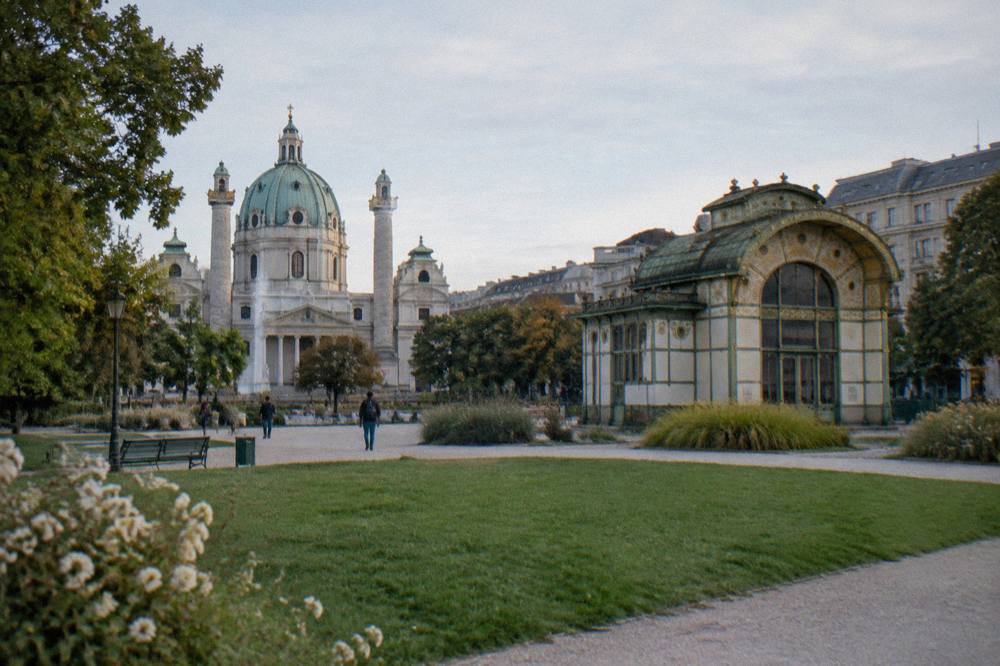
The architecture sites round the collection out. The Otto Wagner Pavillon Karlsplatz is the architect's former Stadtbahn station standing on the square outside the main museum, the Otto Wagner Hofpavillon Hietzing is its counterpart near Schönbrunn, and the Otto Wagner Kirche am Steinhof is his church on the hospital hill in the 14th district, the one site here that genuinely needs a deliberate trip. The Uhrenmuseum in the city centre holds the clock collection, the Pratermuseum tells the story of the fairground, and the Hermesvilla, out in the Lainzer Tiergarten, is the former imperial hunting lodge that now shows imperial life exhibits, with the wildlife park around it free to enter during its daylight-based opening hours.
The other walk that shares this ground is the Historical Spots Walk with guide Jan, a free GuruWalk rated 4.93 out of 5 across 60 English-language GuruWalk reviews, about 2 hours in English, meeting at the Albertina and covering Josefsplatz, the Hofburg and Heldenplatz, the Volksgarten, Minoritenplatz and the Freyung. Its meeting point is a few minutes' walk from the Karlsplatz museum, and the Freyung it ends toward is the neighbourhood of the Beethoven Pasqualatihaus, so the walk and the EUR 6 museum site pair naturally on any day of the week. A free walk worth pairing with this: 2 Hours 15 Minutes, Guide Mirko.
How Long Does A Visit Take?
Most people spend about an hour in the Karlsplatz permanent exhibition, longer if they read everything, and the special exhibitions add roughly an hour each. The small satellites take 30 to 45 minutes each, the Römermuseum and Uhrenmuseum a little more, and the Hermesvilla is a half-day outing once travel time to the Lainzer Tiergarten is counted. Plan two or three sites per day at most.
These are planning ranges based on the size of the sites, not operator promises, and the honest advice is that the small composer apartments reward slow visits rather than fast ones. A sensible free-day structure is one anchor plus one or two satellites that share a district: Karlsplatz plus the Otto Wagner Pavillon Karlsplatz plus the Secession's first-Wednesday-free building all sit on the same square, while a first-Sunday route could take in the Römermuseum and the Virgilkapelle, which are both in the inner city and both drop to free on the same day.
Time also depends on when you go. The first Sunday is free everywhere, and the permanent exhibition is free as well. If you are building a whole free day around the museum, the evening offers a second act: Vienna has a free evening walking tour on freetour.com, the Evening Highlights Walk by Prime Tours, rated 8.5 out of 10 across 1,985 freetour.com reviews, which departs at 7 PM in English from Helmut-Zilk-Platz, the square directly outside the main museum. A museum afternoon flowing into an evening walk is one of the cleanest free days the city can produce.
If your time is short and your interests are broad, the classic free tours cover more ground per hour than any museum can. The Meet the Locals Walk by Absolute Vienna Tours, rated 4.56 out of 5 across 2,189 English-language GuruWalk reviews, starts at Albertinaplatz and takes in the Wiener Opernhaus, the Hofburg, the Stephansdom, the Albertina, the Spanish Riding School, Michaelerplatz, the Graben, the Austrian National Library, Heldenplatz and Helmut Zilk Square. The Top Sights walk by Prime Tours, rated 4.47 out of 5 across 1,309 English-language GuruWalk reviews, runs in English, German, Spanish and Italian from the same square. And the evening walk above closes the day. Whichever structure you choose, the museum's free layers mean the only fixed cost in a Vienna day can end up being lunch.
Common Questions About The Wien Museum
Is The Wien Museum Free?
Partly, and the free part is the main one: the permanent exhibition at the Karlsplatz site is free for everyone on every opening day, and musa is free too. Special exhibitions and the satellite sites charge on ordinary days, but all of them are free on the first Sunday of the month and for under-19s.
Is Any Part Free Or Free On A Certain Day?
Yes. The Karlsplatz permanent exhibition and musa are free every day. On the first Sunday of every month, free entry extends to the permanent and special exhibitions at all 15 Wien Museum sites. The scheme covers Wien Museum sites only, not the Secession or Kunsthalle Wien, which run their own free days.
What Does A Ticket Cost?
Special exhibitions at Karlsplatz cost EUR 13 regular and EUR 11 reduced, or EUR 9 and EUR 7 depending on the show. The Beethoven Museum, Hermesvilla, Pratermuseum, Römermuseum and Uhrenmuseum charge EUR 9 and EUR 7, and the nine smaller sites charge EUR 6 and EUR 5. Under-19s pay nothing on any day.
What Is Inside?
The free permanent exhibition covers Vienna's history from Roman times to the present. The satellites are single-story sites: two Beethoven homes, the Haydnhaus, the Schubert Geburtshaus, the Johann Strauß Wohnung, the Uhrenmuseum, the Römermuseum with visible Roman remains under Hoher Markt, the Pratermuseum, the Hermesvilla, three Otto Wagner buildings and the underground Virgilkapelle.
How Long Does A Visit Take?
Plan about an hour for the Karlsplatz permanent exhibition and about an hour per special exhibition. The small satellites take 30 to 45 minutes each, and the Hermesvilla is a half-day outing including travel to the Lainzer Tiergarten. Two or three sites per day is a realistic maximum.