Free Things To Do In Vienna With Kids
Vienna gives families an unusually large free layer: parks, courtyards, markets, a free permanent museum exhibition and twelve pay-what-you-want walking tours. This guide separates what is genuinely free from what only looks that way.
Short answer
Yes, families can fill days in Vienna without buying tickets. The city's parks, palace gardens, markets and the Wien Museum's permanent exhibition cost nothing, under-19s enter many major museums free, and twelve free pay-what-you-want walking tours run on GuruWalk and freetour.com. The paid traps are the zoo at EUR 29, the Wurstelprater rides and the big-ticket palaces.
Vienna is one of the few European capitals where a family can genuinely spend three days and buy almost nothing. The city runs a free layer most visitors never notice: the Wien Museum's permanent exhibition at Karlsplatz costs nothing for anyone, the palace gardens at Schönbrunn and the Belvedere are free to walk, and twelve free pay-what-you-want walking tours run in the city, listed on GuruWalk and freetour.com. Free Things To Do In Vienna exists to keep those facts straight, because the traps are real too. The zoo inside the free Schönbrunn park charges EUR 29 for an adult day ticket, the Wurstelprater fairground rides each carry their own price, and several museums that look free for children charge small youth tickets instead.
This guide walks through the whole family picture: what children can actually do at no cost, which parks and playgrounds are free, whether a pay-what-you-want walking tour suits children, what to do in rain, where families save on food, and how many days a Vienna trip with kids realistically needs. Every price and every free claim below comes from the operators' own pages, and every conditionally free sight is labelled with its condition in the same breath.
What Can Kids Do In Vienna For Free?
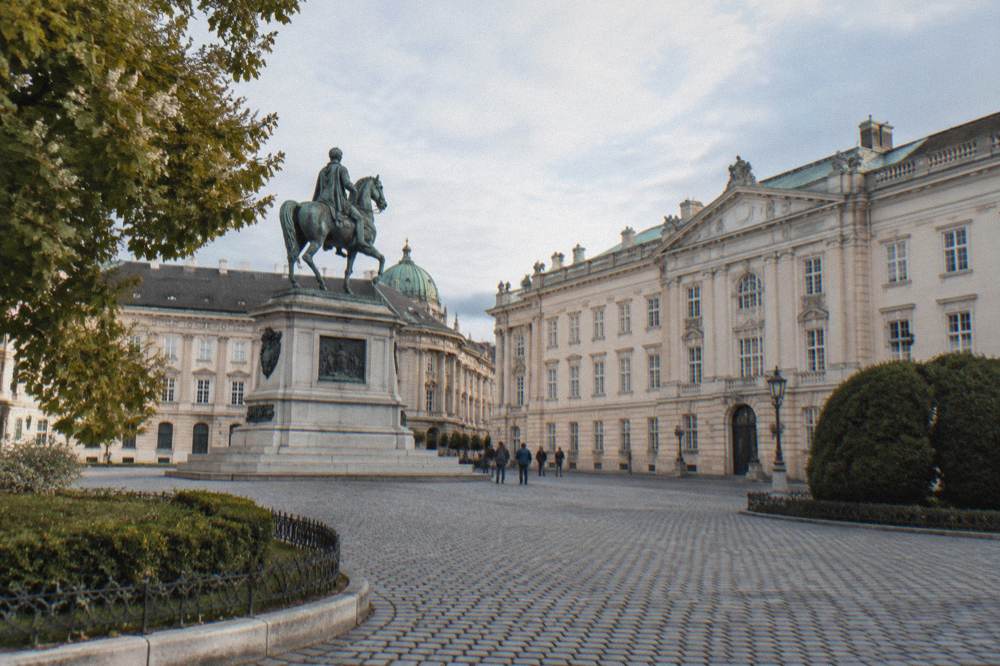
Plenty, and most of it is outdoors or in walk-through courtyards: children can watch the Ankeruhr figures parade at noon at Hoher Markt, look at the Hundertwasserhaus from the street, run around the MuseumsQuartier courtyards, see the gilded Johann Strauss Monument in the Stadtpark, and drink free spring water from the city's drinking fountains, all without a single ticket. Pair this with a free walk: Jewish Traces, Hitler's Vienna.
The Ankeruhr, the large Art Nouveau clock on Hoher Markt, can only be viewed from outside, which is exactly why it costs nothing. Its moving figures parade daily at 12 pm, a short, reliable spectacle that fits neatly into a morning in the city centre. Hoher Markt is also the meeting point of one of the free history walks, so the square works as a base for families combining a tour with free sightseeing.
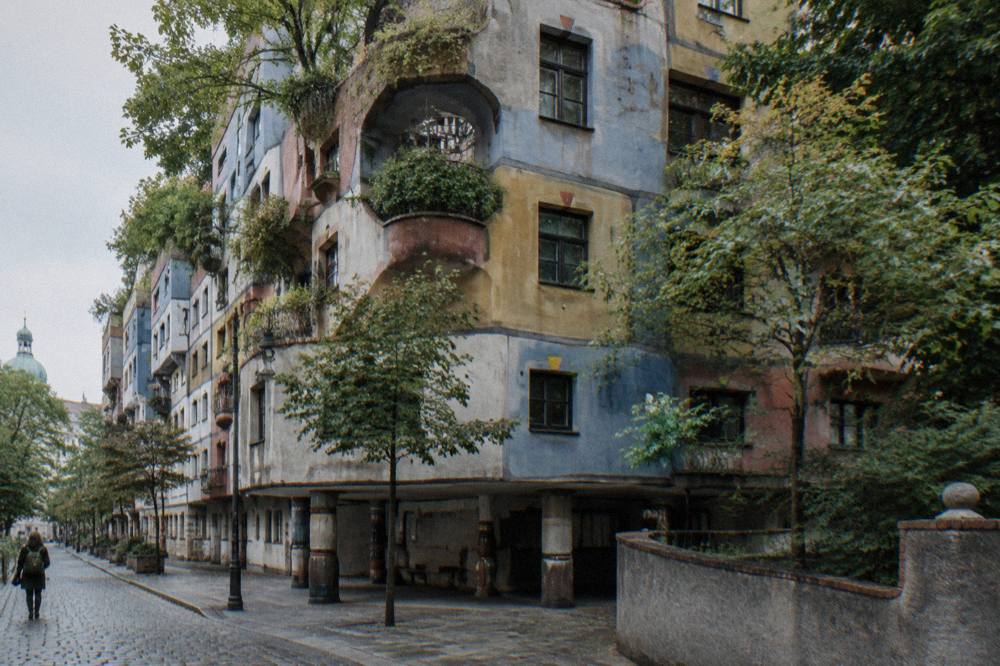
The Hundertwasserhaus is a residential apartment building, so there is no interior visit at all; the Vienna Tourist Board confirms it can only be viewed from outside, and that is the free way to see it. Next door, the Hundertwasser Village shopping courtyard states "Eintritt frei", so families can walk in, look around the shops and cafés, and pay only for whatever they choose to buy. The Kunst Haus Wien museum across the way is a separate, paid attraction, and its youth rule is unusual: children up to 10 are free, but adolescents up to 18 pay EUR 7, so do not assume the usual under-19 free rule applies there.
The MuseumsQuartier courtyards are freely accessible, which makes them one of the most practical free stops for families: open space in the middle of the museum district, with the Leopold Museum, mumok and Kunsthalle Wien each selling their own tickets inside. The Johann Strauss Monument in the Stadtpark is on the Vienna Tourist Board's free-admission list, and the park around it is the city's first public park with no entry charge printed anywhere. And the City of Vienna's drinking fountains give everyone free refreshment with spring water, switched off in winter to prevent freezing, a small fact that saves a family with thirsty children a surprising amount over a week.
| Free sight | What it is | The condition |
|---|---|---|
| Ankeruhr, Hoher Markt | Art Nouveau clock, figures parade at 12 pm | Viewed from outside only, nothing to pay |
| Hundertwasserhaus | Apartment building by Hundertwasser | Street view only, it is a residential building |
| Hundertwasser Village | Shopping courtyard next door | Entry free, purchases paid |
| MuseumsQuartier courtyards | Open courtyards between the museums | Free access, museum tickets separate |
| Stadtpark and Strauss Monument | Public park and gilded monument | No entry charge |
| Vienna drinking fountains | Free spring water across the city | Switched off in winter |
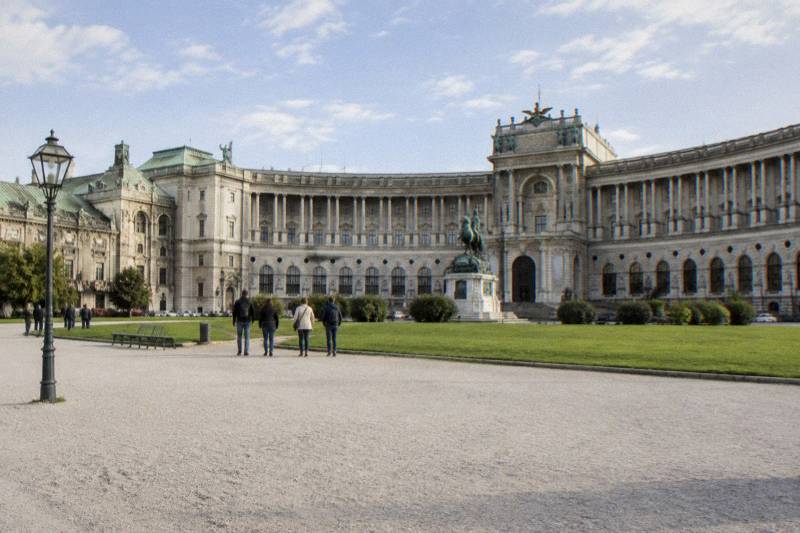
One more free layer deserves a family's attention: the open squares around the Hofburg. Heldenplatz, Josefsplatz, the In der Burg courtyard and Michaelerplatz are public spaces, and the Vienna Tourist Board describes Heldenplatz as a meadow where many Viennese picnic. The Sisi Museum, the Imperial Treasury and the Spanish Riding School inside the same complex are separate paid records, but the squares themselves are simply city ground. Pair this with a free walk: Meet The Locals Walk.
Which Parks And Playgrounds Cost Nothing?
The big family parks are free to enter: the Augarten, the green Prater with its Hauptallee, the Donauinsel with free natural bathing spots, the Stadtpark, the Burggarten and the Volksgarten all cost nothing, while the Wurstelprater rides, the Riesenrad, the four public lidos and the Schönbrunn zoo are each separate paid items inside or beside free ground.
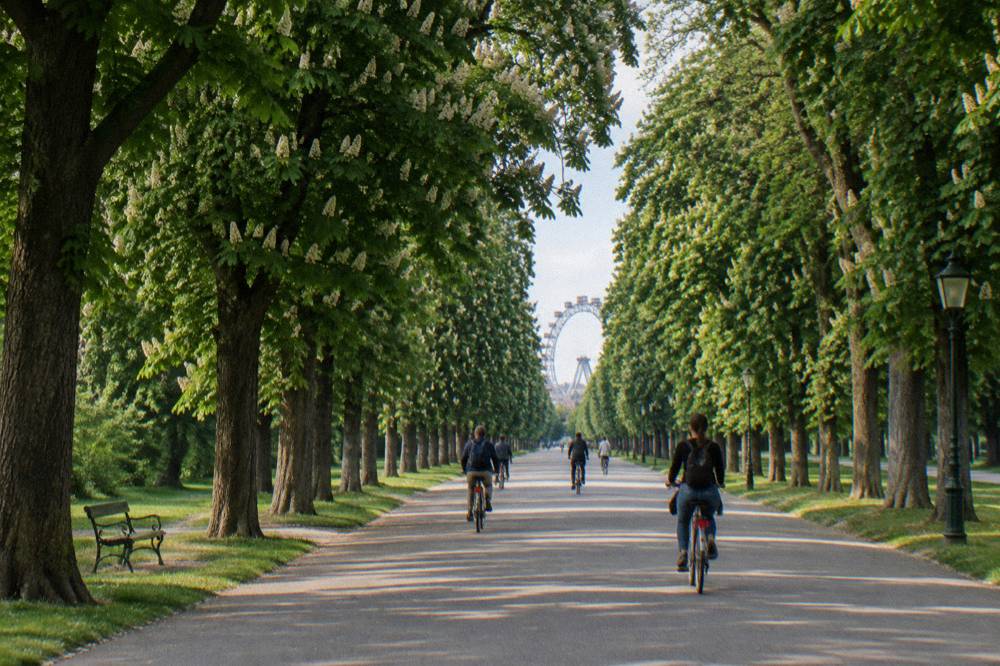
The green Prater is the clearest example of the free-park-paid-extra pattern. The parkland and the Hauptallee are open public ground, with cycling permitted on the Hauptallee, which makes it a natural family cycling route on rented or brought bikes. The Wurstelprater fairground sits inside that free ground and is itself free to walk into, open daily all day, but every ride and attraction is paid separately by its own operator. The Riesenrad, the giant ferris wheel, needs its own ticket too, and no price is published here because the official ticket pages are script-rendered and the figure could not be read on a fetched page. For a budget family, the honest framing is: the playground of the whole district is free, the rides are à la carte.
The Donauinsel is a 21 km recreational island run by the City of Vienna, and the city's bathing guide marks free natural bathing spots, "Gratis Naturbadeplatz", separately from the paid Strandbäder. That distinction matters on a hot day: the lawns at the free spots cost nothing, while the Strandbad Gänsehäufel and Strandbad Alte Donau lidos charge admission, EUR 8.10 for adults and EUR 2.80 for children at the published rates, with cheaper afternoon tickets. The Alte Donau works the same way, with many free bathing opportunities such as the lawns at Romaplatz, and the same four paid lidos as the exception.
The Augarten, Vienna's Baroque park in the 2nd district, is free to enter, and the porcelain museum and factory tours inside it are separate paid records, EUR 8 for the museum. The Setagaya Park, the city's Japanese garden, charges no admission but is closed from 1 December to 28 February and in wintry conditions, so it is a spring-to-autumn stop. The Schönbrunn Palace Park is the headline free park: gates open at 6:30 am and the park can be entered free of charge during opening hours, while the palace, the Gloriette terrace, the Maze, the Privy Garden, the Palm House, the Desert House and the Tiergarten zoo are each separate tickets. Families often assume the zoo is part of the park visit; it is not, and an adult day ticket is EUR 29, EUR 17 for children and youth. The park's closing time falls to 19:00 in October and 17:30 from November, and the fountains do not operate from mid-October to mid-April.
| Park or water | Free part | Paid part beside it |
|---|---|---|
| Green Prater and Hauptallee | Parkland, cycling avenue | Wurstelprater rides, Riesenrad |
| Donauinsel | Free natural bathing spots | Paid Strandbäder lidos |
| Augarten | The Baroque park | Porcelain museum EUR 8 |
| Schönbrunn Palace Park | Gardens and grounds from 6:30 am | Palace, Gloriette, Maze, zoo EUR 29 adult |
| Stadtpark | Public park, Strauss Monument | Kursalon concerts ticketed |
| Setagaya Park | Japanese garden, no charge | Closed 1 Dec to 28 Feb |
For families planning around animals, one honest note: the Tiergarten Schönbrunn is one of the paid items, and the Haus des Meeres aquarium is too, at EUR 23.50 for an adult online ticket and EUR 9.80 for a child aged 6 to 15. Neither is free, and no free equivalent exists in the city; the free animal encounters are the wildlife of the Lainzer Tiergarten, where entry is free and opening hours follow daylight length, with the Hermesvilla museum inside it following the Wien Museum's paid rules.
Is A Free Walking Tour Right For Children?
A two-hour pay-what-you-want walk is a reasonable fit for school-age children, and Vienna's free tours make it easy to test: the classic highlights walks run about two hours, meet at central squares like Albertinaplatz and Minoritenplatz, and cost nothing up front, so a family reserves free spots and pays the guide only what the walk felt worth at the end.
Twelve free walking tours run in Vienna, listed on GuruWalk and freetour.com. The most family-tested starting point is the Good Vienna Tours Classic Highlights walk on GuruWalk: it meets at Albertinaplatz, runs about two hours in English and German, and is rated 4.9 out of 5 across 5,854 English-language GuruWalk reviews, the second-largest review pool of any English walk in the city. Its listing names the Vienna Operahouse, the Austrian National Library, the Schweizerhof, Heldenplatz, the Sisi Museum, Michaelerplatz, the plague column and Stephansdom among its stops, a route that doubles as a free orientation to the whole Innere Stadt for children old enough to walk it. A free walk worth pairing with this: Good Vienna Tours, Classic Highlights.
The same family logic applies to the Part 1 Highlights walk by redandwhite Tours, also on GuruWalk: it meets at the Wiener Staatsoper, runs two hours in English and German, and is rated 4.73 out of 5 across 6,036 English-language GuruWalk reviews, the largest English review pool of any walk in the city. Its own stop list names the Operahouse, Burggarten, Heldenplatz, Josefsplatz and Stephansdom, which keeps the whole route inside the compact centre, short walking legs between stops and plenty of grass at Heldenplatz and in the Burggarten for a mid-walk break. If you also want a guide, Part 1 Highlights, Redandwhite Tours is a free walk to pair with it.
Two hours is the honest upper bound for most children on a city walk, and the roster reflects that: nearly every walk in the city runs two hours, with the guide Mirko's city centre walk at two hours and 15 minutes, rated 4.94 out of 5 across 3,250 English-language GuruWalk reviews, the highest rating of any large-pool English walk, meeting at Minoritenplatz. The Meet the Locals walk by Absolute Vienna Tours, rated 4.56 out of 5 across 2,189 English-language GuruWalk reviews, covers a similar centre ground from Albertinaplatz. Because every one of these is pay-what-you-want, the financial risk of trying a walk with a child who might not finish it is zero, and a family that needs to peel off early simply does so.
| Walk (GuruWalk unless noted) | Meets at | Duration | Rating and pool |
|---|---|---|---|
| Good Vienna Tours, Classic Highlights | Albertinaplatz | 2 hours | 4.9 out of 5, 5,854 reviews |
| Part 1 Highlights, redandwhite Tours | Wiener Staatsoper | 2 hours | 4.73 out of 5, 6,036 reviews |
| 2 Hours 15 Minutes, Guide Mirko | Minoritenplatz | 2 hours 15 minutes | 4.94 out of 5, 3,250 reviews |
| Meet the Locals Walk | Albertinaplatz | 2 hours | 4.56 out of 5, 2,189 reviews |
| Evening Highlights Walk (freetour.com) | Helmut-Zilk-Platz | 2 hours | 8.5 out of 10, 1,985 freetour.com reviews |
One timing note is safe to state because it is the only listed departure time in the roster: the Evening Highlights Walk on freetour.com, run by Prime Tours, starts at 7 pm in English from Helmut-Zilk-Platz, rated 8.5 out of 10 across 1,985 freetour.com reviews. For families it is a later-evening option rather than a default, and its scale is freetour.com's own out of 10, never to be read as a out-of-5 figure. Tipping is the walker's choice on every one of these walks, and no official amount exists; a family pays what the walk was worth to them, per person, at the end.
What About Rainy Days?
Rain pushes families toward the museums, and the money question is the under-19 rule, which is set museum by museum: the Kunsthistorisches Museum, Naturhistorisches Museum, Albertina, MAK, Belvedere, mumok, Kunsthalle Wien, Imperial Treasury and Jewish Museum Vienna all state free entry for under-19s, while the Leopold Museum charges youths EUR 2.50, Kunst Haus Wien charges EUR 7 up to 18, and the Wien Museum's permanent exhibition is free for everyone, every day. If you also want a guide, Top Sights, Multilingual Guide is a free walk to pair with it.
The single best free rainy-day stop is the Wien Museum's permanent exhibition "Vienna. My History" at Karlsplatz: it is free for everyone and needs no ticket, though the museum says queues are possible. Its special exhibitions are ticketed, at EUR 13 regular and EUR 11 reduced or EUR 9 and EUR 7 depending on the show, but free for under-19s and for everyone on the first Sunday of every month, a scheme that covers all Wien Museum sites, including the Uhrenmuseum, the Römermuseum at Hoher Markt and the Pratermuseum, each otherwise EUR 9 regular and EUR 7 reduced. That first-Sunday scheme applies only to Wien Museum sites, never to the federal museums or the Secession, which runs its own free first Wednesday, and Kunsthalle Wien, which is free the last Sunday of every month and pay-what-you-can on Thursdays from 17:00 to 20:00.
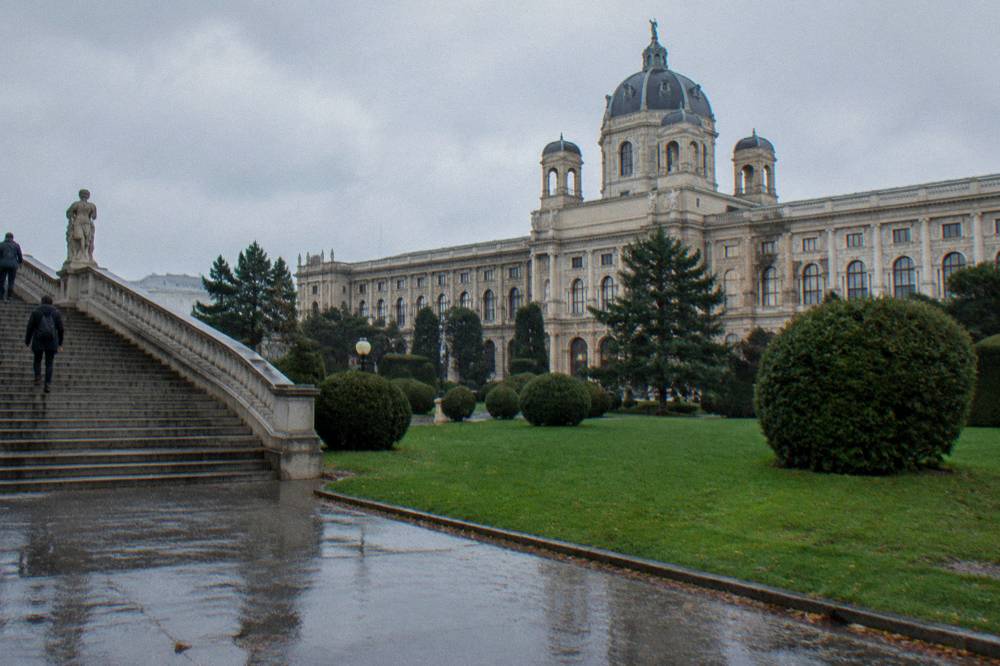
For the big museums, the under-19 rules are each operator's own, so a family checks per museum rather than assuming a blanket rule. The Kunsthistorisches Museum is free for kids and teens under 19, with adult admission at EUR 22 online and EUR 24 on site, and from 8 September 2026 admission is only with reserved time slots, so booking ahead is now part of the visit. The Naturhistorisches Museum is also free under 19, adults EUR 18, reduced EUR 14, with halls 29 to 32, the bird halls, closed for reconstruction. The Albertina is free under 19 with ID, adults EUR 20.90. The MAK is free under 19, adults EUR 18 online and EUR 19 on site, and its Design Lab is closed from 2 November 2026 until 8 June 2027 for redesign. The mumok is free under 19, adults EUR 18. The Imperial Treasury is free up to 19, adults EUR 16 online and EUR 18 on site, and closed Tuesdays.
The exceptions are the ones that catch families out. The Leopold Museum, inside the free MuseumsQuartier courtyards, is not free under 19: youths pay EUR 2.50, adults EUR 19, and only children under 7 are free. Kunst Haus Wien charges EUR 7 for children and adolescents up to 18, free only up to 10, with adults at EUR 16. The Dom Museum Wien charges children aged 6 to 18 EUR 3, adults EUR 10. None of these is expensive, but none is free, and the difference is worth knowing before promising a child a museum afternoon at no cost.
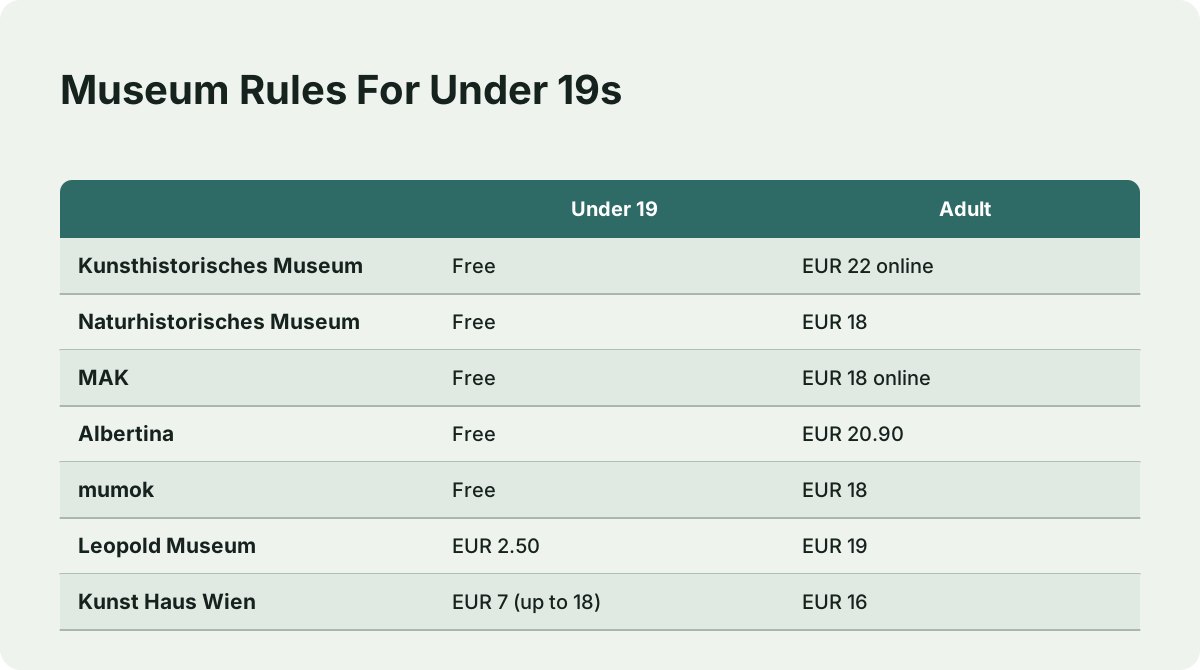
| Museum | Adult price | Under-19 rule |
|---|---|---|
| Wien Museum Karlsplatz, permanent exhibition | Free for everyone | Free for everyone, every day |
| Kunsthistorisches Museum | EUR 22 online, EUR 24 on site | Free under 19, time slots required |
| Naturhistorisches Museum | EUR 18 | Free under 19 |
| Albertina | EUR 20.90 | Free under 19, ID required |
| mumok | EUR 18 | Free under 19 |
| Leopold Museum | EUR 19 | Youths pay EUR 2.50, under 7 free |
| Kunst Haus Wien | EUR 16 | EUR 7 up to 18, free up to 10 |
| Dom Museum Wien | EUR 10 | Children 6 to 18 pay EUR 3 |
Churches fill the remaining rainy gaps, with their own conditions. Entering the Stephansdom is free, though the cathedral sells an EUR 8 self-guided sightseeing visit of the interior and the towers and catacombs are separate EUR 8 tickets each, so a family should decide in front of the door which of those, if any, they want. The Peterskirche holds free daily concerts at 13:30, 15:00 and 19:00 with donations requested, a genuinely good rainy-day stop with children, while its crypt and chamber concerts are ticketed. The Karlskirche is not free: the sightseeing visit is EUR 9.50, with children aged ten and under free.
Where Do Families Save On Food And Transport?
Families save on food by walking the free-entry markets and eating picnic style: browsing the Naschmarkt, its Saturday flea market and the Brunnenmarkt costs nothing and the purchases are the only cost, while the city's free drinking fountains cover drinks, and on transport the honest note is that the Vienna City Card and Vienna Pass are paid products that give discounts, not free entry.
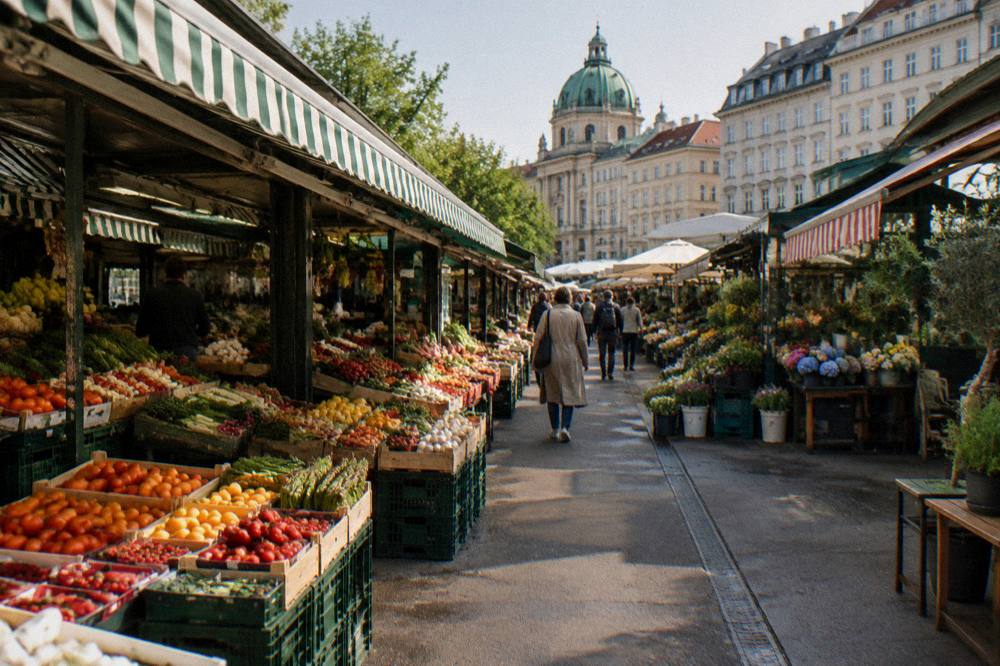
The Naschmarkt is Vienna's famous market strip, and walking it is free; the Vienna Tourist Board lists it among sights with free admission, and the only money spent is on food and goods. The Saturday flea market beside it is the same deal, browsing free, Saturday only. The Brunnenmarkt in the 16th district, Vienna's largest street market, works identically and is a more local, cheaper-feeling version of the same idea, with Yppenplatz at its end. For a family, a market walk plus a picnic is the single biggest daily saving available in Vienna, and the Heldenplatz meadow, where many Viennese picnic, gives it a home in the centre. Pair this with a free walk: 2 Hours 15 Minutes, Guide Mirko.
Drinks are the quiet saving. The City of Vienna's drinking fountains give everyone free refreshment with spring water, so a refillable bottle does real work from spring to late autumn; the fountains are switched off in winter to prevent freezing. Tap water in Vienna is spring water, a point of local pride, and restaurants serve it on request as a matter of course.
On transport, the Vienna City Card and the Vienna Pass are paid products, not free entry. The City Card, from about EUR 19 for 24 hours per the Vienna Tourist Board, gives transport and discounts, and the Vienna Pass is a paid sightseeing pass. A family comparing them should read them as discount products and set them against what the family would actually pay, which for a family following this guide is very little, since the walks, parks and the free museum layer already cost nothing. More detail on that comparison sits in the guide to Vienna Pass and City Card costs.
Two seasonal food-adjacent notes are worth planning around. The Film Festival at Rathausplatz has free admission, but its food and drink stalls are paid, and the 2026 season ran 4 July to 6 September and is over, with 2027 dates not yet announced. The Christmas markets are the winter version of the same pattern: the Schönbrunn market, 6 November 2026 to 6 January 2027, lists free entrance on the Schönbrunn event page, while the Rathausplatz Christkindlmarkt, 13 November to 26 December 2026, has no entry rule given on any official page. Food, drink and goods at every market are paid. Families can compare the full winter picture in the Christmas markets and free entry guide.
How Many Days Do Families Need?
Three days is the realistic minimum for a Vienna family trip built on the free layer: day one for the centre and a free walking tour, day two for Schönbrunn's free park or the Prater and Donauinsel, day three for the museums and markets, with the honest caveat that the free layer stretches comfortably to four or five days once the Lainzer Tiergarten, the Danube island and the first-Sunday museum scheme are added.
The centre alone fills a day with children. A morning free walk from Albertinaplatz or the Staatsoper covers the Hofburg squares, Stephansdom and the Graben quarter, and the afternoon can run through the free courtyards of the MuseumsQuartier and the Stadtpark without spending anything. A second day belongs to the big free green spaces: the Schönbrunn Palace Park from its 6:30 am gate opening, with the family deciding in advance whether the EUR 29 zoo is in budget, or the Prater's Hauptallee and the free-to-walk Wurstelprater, with the Donauinsel's free bathing lawns as the warm-weather alternative. A third day takes the museums, ideally a first Sunday if the Wien Museum sites are the target, or any day for the under-19-free federal museums, with the Naschmarkt or Brunnenmarkt as the free lunch-and-walk stop. A free walk worth pairing with this: Evening Highlights Walk.
Families with more time, or with a first Sunday landing inside the trip, can stretch to four or five days without adding ticket cost, because the Wien Museum's first-Sunday scheme covers fourteen sites, from the Uhrenmuseum to the Hermesvilla out in the Lainzer Tiergarten. The Lainzer Tiergarten itself is free to enter and its hours follow daylight length, so in winter it shortens, and the Hermesvilla inside it follows the Wien Museum's paid rules except on that first Sunday. Season matters in the other direction too: the Donauinselfest on 25 to 27 June 2027 is free entry for everyone, and the Vienna Philharmonic's Summer Night Concert at Schönbrunn on 11 June 2027 needs no ticket at all, two dates that can anchor a whole free-visit day each.
For families who want the pacing question answered in detail, the three-day budget itinerary breaks the same layer down day by day, and the shorter Vienna in a day guide covers the single-day version. Whatever the length, the free walking tours are the flexible spine of any plan: they run daily across the centre, they cost nothing to reserve, and a family can slot one into any morning without having planned it weeks ahead.
Common Questions About Free Things To Do In Vienna With Kids
What Can Kids Do In Vienna For Free?
Children can watch the Ankeruhr figures parade at noon at Hoher Markt, see the Hundertwasserhaus from the street and walk into the free Hundertwasser Village courtyard, run around the free MuseumsQuartier courtyards, visit the Stadtpark and its gilded Johann Strauss Monument, and drink free spring water from the city's drinking fountains, all without a ticket.
Which Parks And Playgrounds Cost Nothing?
The Augarten, the green Prater with the Hauptallee, the Donauinsel with its free natural bathing spots, the Stadtpark, the Burggarten, the Volksgarten and the Schönbrunn Palace Park are all free to enter. The Wurstelprater rides, the Riesenrad, the paid lidos and the Schönbrunn zoo at EUR 29 adult are separate paid items inside or beside that free ground.
Is A Free Walking Tour Right For Children?
For school-age children, yes. The classic free walks run about two hours, meet at central squares such as Albertinaplatz and Minoritenplatz, and are pay-what-you-want, so a family reserves free spots and pays the guide what the walk was worth, with no loss if a child needs to stop early.
What About Rainy Days?
The Wien Museum's permanent exhibition at Karlsplatz is free for everyone, every day. Most major museums, including the Kunsthistorisches Museum, Naturhistorisches Museum, Albertina, MAK, Belvedere and mumok, are free for under-19s, while the Leopold Museum charges youths EUR 2.50 and Kunst Haus Wien charges EUR 7 up to 18. The Peterskirche also holds free daily concerts at 13:30, 15:00 and 19:00 with donations requested.
Where Do Families Save On Food And Transport?
Walking the Naschmarkt, its Saturday flea market and the Brunnenmarkt is free, with only purchases paid, and the city's free drinking fountains cover drinks. The Vienna City Card and Vienna Pass are paid discount products, not free entry, so a family already using the free layer gets little from them.
How Many Days Do Families Need?
Three days is the realistic minimum: one for the centre and a free walking tour, one for Schönbrunn's free park or the Prater and Donauinsel, and one for the museums and markets. The free layer stretches to four or five days once the Lainzer Tiergarten and the Wien Museum's first-Sunday scheme are added.