Is The Vienna Card Worth It?
A plain-language look at whether the Vienna City Card pays for itself, set against the city's genuinely free museums, parks and pay-what-you-want walking tours.
Is The Vienna Card Worth It?
For most visitors, the Vienna City Card is a marginal purchase. It is a paid product, from about EUR 19 for 24 hours per the Vienna Tourist Board, and it gives public transport plus discounts at partner sights, not free entry. Vienna's free layer is deep: the Wien Museum's permanent exhibition is free every day, the palace parks cost nothing, and twelve pay-what-you-want walking tours run the centre. A discount card has to beat all that.
The honest starting point is what the card actually is. The Vienna Tourist Board sells it as a combined transport-and-discounts product, with variants for longer stays, and the Vienna Pass is a separate and dearer sightseeing pass that bundles actual entry. Neither is free, and neither should be confused with the city's own free schemes, which are run by museums and the municipal government and require no purchase at all. The distinction matters because marketing copy for city cards tends to blur "discount" and "included", and in Vienna the blur is expensive: the sights a first-time visitor most wants to see, the Stephansdom, the Hofburg squares, the Belvedere gardens, the Schönbrunn park, are either free to enter or free to walk through without any card. A free walk worth pairing with this: Evening Highlights Walk.
There is a second, quieter reason the card's value is hard to state as a single number: the discounts it offers vary by partner, and the Vienna Tourist Board's page for the card does not publish a per-attraction discount table. The Vienna Tourist Board does state the card's own nature, transport plus discounts, and its starting price of roughly EUR 19 for the 24-hour version. Any claim beyond that, a percentage saved here, a break-even point there, would be invented. So this article works the question from the other end: it lists what Vienna's paid sights actually cost, what the free alternatives genuinely are, and lets the arithmetic that the facts support speak for itself.
One more framing point. The card competes not only against full-price tickets but against Vienna's pay-what-you-want walking tours, which are the cheapest guided sightseeing in the city. Twelve free walking tours run in Vienna, listed on GuruWalk and freetour.com, and they cover the centre, the evening, the Jewish quarter and the hidden western districts. If the question is "card or no card", the fair comparison is card-discounted paid sights on one side and free museums, free parks and free walks on the other.
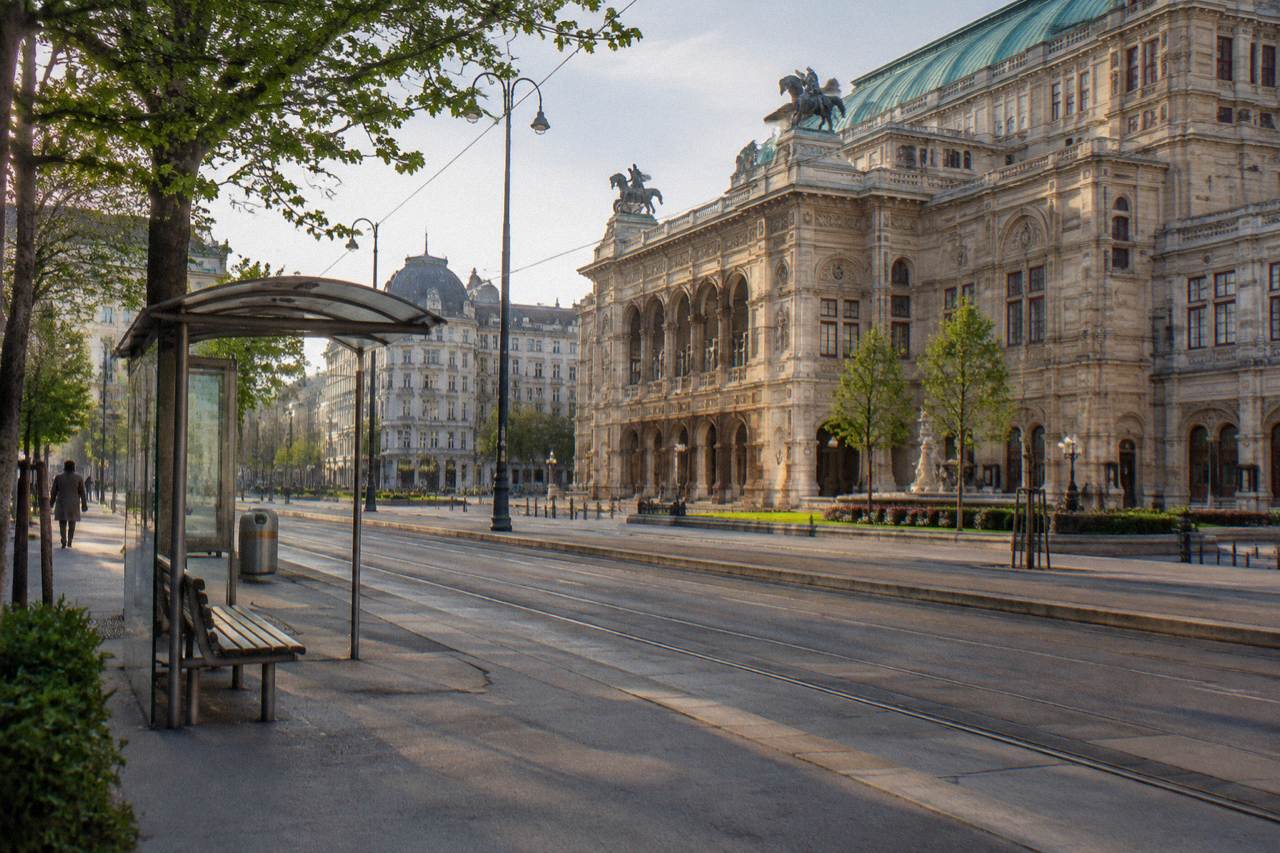
The three walks above illustrate the point without costing anything to reserve. Part 1 Highlights by Redandwhite Tours starts at the Wiener Staatsoper and covers the Burggarten, Heldenplatz, Josefsplatz and Stephansdom in about two hours, rated 4.73 out of 5 across 6,036 English-language GuruWalk reviews. The Evening Highlights Walk by Prime Tours is a freetour.com listing, rated 8.5 out of 10 across 1,985 freetour.com reviews, meeting at Helmut-Zilk-Platz with a 7 PM English departure. The Meet the Locals Walk by Absolute Vienna Tours, 4.56 out of 5 across 2,189 English-language GuruWalk reviews, starts at Albertinaplatz. None of these needs a card, a deposit or a booking fee: you reserve a free spot and pay the guide what you think the walk was worth at the end. If you also want a guide, Part 1 Highlights, Redandwhite Tours is a free walk to pair with it.
How Many Sights Do You Need To Break Even?
To break even, you generally need to use the card on two or three full-price museums. The card starts at about EUR 19 for 24 hours, while major museums charge between EUR 18 and EUR 24 at the door, so a couple of discounted visits plus a few euros of transport value can cover the cost. If your itinerary leans on free sights like the Wien Museum, parks, and walks, it almost certainly does not pay off.
The right way to test this is to price your actual itinerary before buying anything. Below are the adult prices as listed on each museum's own page, with no sums added, because the card's discount per sight is not published.
| Sight | Adult price, as published | Free window that exists without any card |
|---|---|---|
| Albertina | EUR 20.90 | Children under 19 free |
| Kunsthistorisches Museum | EUR 22 online, EUR 24 on site | Under 19 free; time-slot reservation required |
| Naturhistorisches Museum | EUR 18 | Children and teenagers under 19 free |
| Belvedere, Upper gallery | EUR 23.00, day-current price | Under 19 free |
| mumok | EUR 18 | Under 19 free |
| MAK | EUR 18 online, EUR 19 on site | Under 19 free; Tuesday evenings reduced, not free |
| Leopold Museum | EUR 19 | Under 19s pay EUR 2.50, not free |
| Wien Museum, special exhibitions | EUR 13 or EUR 9, reduced tiers below each | First Sunday of every month, everyone |
| Imperial Treasury | EUR 16 online, EUR 18 on site | Up to 19 free |
Read that table twice, once for prices and once for the free column. Two patterns jump out. First, the under-19 free rule is real and broad, but it is a per-museum rule, not a national one: the Kunsthistorisches Museum, Naturhistorisches Museum, Albertina, MAK, Belvedere, mumok, Kunsthalle Wien, the Imperial Treasury, the Wien Museum sites and the Jewish Museum Vienna all state it on their own pages, while the Leopold Museum charges youths under 19 EUR 2.50 and Kunst Haus Wien charges EUR 7 up to age 18. A family with teenagers therefore gets an enormous amount of Vienna free with no card at all, and the card's discounts would apply mainly to the adults.
Second, several of the most famous institutions have standing free or reduced windows that no card can improve on. The Wien Museum's permanent exhibition at Karlsplatz is free for everyone, every day, and all Wien Museum sites, the Hermesvilla, the Römermuseum, the Pratermuseum, the Uhrenmuseum, the Beethoven Museum, the Haydnhaus and the rest, are free on the first Sunday of every month. The Secession is free on the first Wednesday of every month, with 7 October, 4 November and 2 December 2026 on its page. Kunsthalle Wien is free on the last Sunday of every month and runs pay-what-you-can on Thursday evenings. A visitor who plans around those days can see a serious amount of art for nothing, which is the bar the card has to clear.
The card's best-case customer is therefore someone with a dense, paid, adult itinerary: two or three full-price federal museums in a day or two, plus reliance on public transport, plus whatever partner discounts apply at restaurants and shops. The card's worst-case customer is someone whose list reads Stephansdom, Hofburg squares, Belvedere gardens, Schönbrunn park, Naschmarkt, Donaukanal street art and a free walking tour, because on that itinerary the card discounts almost nothing and the transport is the only thing it delivers. A free walk worth pairing with this: Meet The Locals Walk.
Does It Cover Public Transport?
Transport is the card's core inclusion: the Vienna City Card bundles public transport with its discounts, and that is the part a buyer can value with confidence, since Wiener Linien's network covers the whole city. What can be said plainly is that Vienna's centre is walkable between its major sights.
The transport question deserves honesty rather than sales copy. The card's own description, per the Vienna Tourist Board's page on it, is a product that combines travel on public transport with discounts, and the tourist board lists its starting price at about EUR 19 for 24 hours. Whether that beats buying transport separately depends on a single-ticket or day-pass price that the Vienna Tourist Board's page does not publish, so the comparison cannot be made from that page alone. Anyone weighing the card should check the current Wiener Linien ticket prices directly and compare them with the card's price for their stay length before assuming the transport alone justifies it.
Vienna rewards walking to a degree few visitors expect. The classic chain of sights, from the Staatsoper along the Ring, through the Burggarten and Heldenplatz, past the Hofburg squares to the Graben and the Stephansdom, is a compact walking corridor, and the free tours are built on exactly that geography. The Part 1 Highlights walk starts at the Wiener Staatsoper and covers the Burggarten, Heldenplatz, Josefsplatz and the Stephansdom, all on foot. The 2 Hours 15 Minutes walk with guide Mirko starts at Minoritenplatz and covers the Volksgarten, Heldenplatz, Burggarten, Albertinaplatz and Stephansplatz U, again entirely on foot, rated 4.94 out of 5 across 3,250 English-language GuruWalk reviews. If you also want a guide, 2 Hours 15 Minutes, Guide Mirko is a free walk to pair with it.
Where transport genuinely earns its cost is the outer sights: Schönbrunn and its park, the Belvedere at the edge of the centre, the Zentralfriedhof, the Prater, the Kahlenberg side of the Vienna Woods. Those are real distances and the U-Bahn and tram network handles them well. But note what those destinations have in common: the Schönbrunn park is free during opening hours, the Belvedere gardens are free, the Zentralfriedhof is free to enter, the green Prater is free public ground. The transport takes you to free things, which is a different purchase decision from a card that discounts paid things.
Which Free Options Replace It?
Yes: Vienna's free sights and free-day schemes cover much of what the card offers. The Wien Museum's permanent exhibition, Schönbrunn park, the Belvedere gardens, Hofburg squares, the Volksgarten and Burggarten, the Naschmarkt and Brunnenmarkt, the Donaukanal legal walls, the Zentralfriedhof, and pay-what-you-want walking tours cost nothing, while free-day schemes at the Wien Museum, the Secession, and Kunsthalle Wien replace card discounts on the days they run.
A card cannot discount a price of zero, and that is the structural problem the Vienna City Card faces in this city. The strongest replacements are the ones that are free with no conditions at all. The Wien Museum's permanent exhibition, "Vienna. My History", at Karlsplatz is free of charge for everyone and needs no ticket. The musa, the Wien Museum's contemporary art venue at Felderstraße, is free. The Schönbrunn Palace Park opens its gates at 6:30 am and can be entered free of charge during opening hours, with the palace, the Gloriette terrace, the maze, the Privy Garden, the Palm House, the Desert House and the zoo each a separate paid record. The Belvedere's gardens are admission free, dogs excepted, while the galleries are ticketed. The Hofburg's open squares, Heldenplatz, Josefsplatz, the In der Burg courtyard and Michaelerplatz, are public space where Viennese picnic on the Heldenplatz meadow. The Volksgarten and Burggarten are public parks with no entry charge.
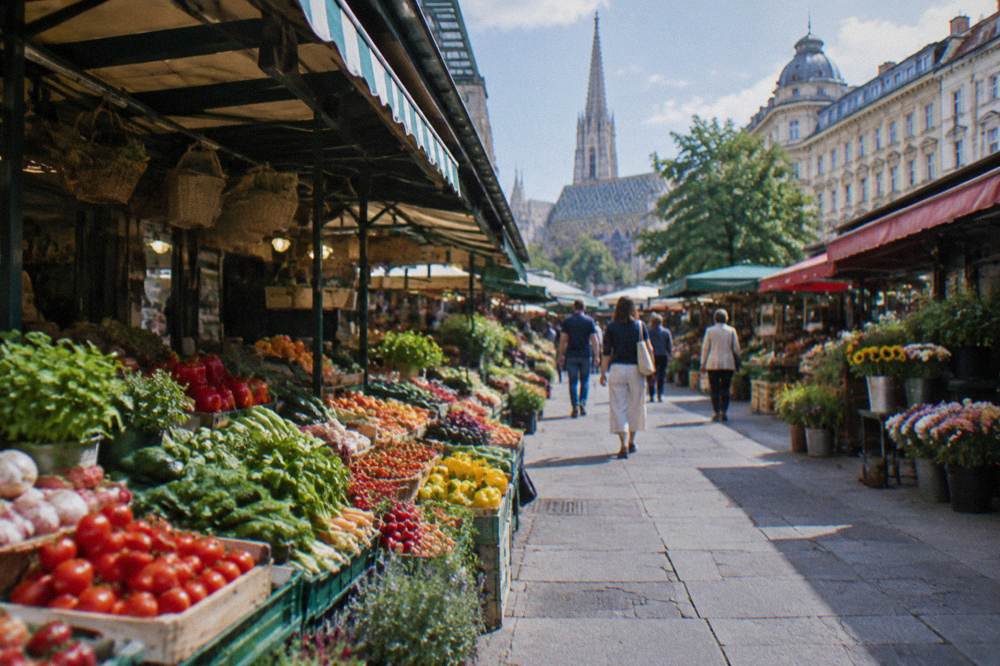
Then the markets and the outdoor city: walking the Naschmarkt is free and its Saturday flea market is free to browse, the Brunnenmarkt is free to walk, the Donaukanal's street art and the city-backed Wienerwand legal walls are public, and the Zentralfriedhof's honorary graves are free to visit with an ID for car access. The Hundertwasser Village states "Eintritt frei" for its shopping courtyard, and the Hundertwasserhaus itself is free to look at from the street, being a residential building with no interior visit. The MuseumsQuartier courtyards are freely accessible, with only the Leopold Museum, mumok and Kunsthalle Wien inside charging their own admissions. The full breakdown of these sits in the site's free museums guide, and the question of Schönbrunn's park-versus-palace split is answered in Is Schönbrunn Palace Free?.
The walking tours are the replacement category most card buyers overlook. Twelve free walking tours run in Vienna, listed on GuruWalk and freetour.com, and this site's free walking tours overview maps them all. In the classic centre, the Part 1 Highlights walk by Redandwhite Tours, rated 4.73 out of 5 across 6,036 English-language GuruWalk reviews, starts at the Wiener Staatsoper and takes in the Burggarten, Heldenplatz, Josefsplatz and Stephansdom over two hours in English or German. A free walk worth pairing with this: Top Sights, Multilingual Guide.
A different flavour of the same centre comes from the 2 Hours 15 Minutes walk with guide Mirko, an English-language GuruWalk walk rated 4.94 out of 5 across 3,250 English-language GuruWalk reviews, which starts at Minoritenplatz and covers the Volksgarten, Heldenplatz, Burggarten, Albertinaplatz and Stephansplatz U. It is one of the highest-rated walks in the city on the English-language figures, and it costs nothing to reserve.
For depth rather than breadth, the Jewish Traces walk by redandwhite.tours, rated 4.88 out of 5 across 2,513 English-language GuruWalk reviews, starts at Hoher Markt and covers the Judengasse, Seitenstettengasse, Morzinplatz, the Judenplatz Holocaust Memorial and Heldenplatz. The Judenplatz memorial itself is publicly accessible at no charge, with the Jewish Museum Vienna at Judenplatz a separate paid record. So even the history that guidebooks sell as premium content has a free, well-reviewed, guided route through it. Pair this with a free walk: Jewish Traces, Hitler's Vienna.
The free-day schemes are the final replacement layer, and they are where the card's proposition gets weakest. The Wien Museum's first-Sunday scheme covers every Wien Museum site, permanent and special exhibitions alike, and under-19s are free at those sites every day. The Secession, home of the Beethoven Frieze, is free on the first Wednesday of each month. Kunsthalle Wien is free on the last Sunday. None of these requires a card, a pass or any purchase, and a visitor whose dates align with them gets museums the card would only have discounted.
Who Should Buy It?
Buy the Vienna City Card if your itinerary is dense with full-price adult museum entries and you will use public transport daily; the roughly EUR 19 starting price can be recovered against two or three major admissions. Skip it if you are travelling with under-19s, whose free museum entry is broader than any discount, if your dates catch the free-day schemes, or if your list is parks, squares, markets and walking tours, all of which cost nothing.
The card is a discount tool, and Vienna gives away too much for a discount tool to be the default answer. The profile of the card's natural buyer is specific. It is an adult, museum-heavy visitor, in the city for two or three days, moving between the Innere Stadt and the outer sights by U-Bahn, and planning to pay full price at several of the federal institutions. For that visitor, the card's transport component plus discounts at two or three EUR 18 to EUR 24 museums is a plausible win, provided the current discount list on the Vienna Tourist Board's card page matches the actual itinerary. Check the card's own page on the Vienna Tourist Board site before buying, and price the same itinerary without it.
The profile of the visitor who should not buy it is much larger. Families with children and teenagers get the Kunsthistorisches Museum, the Naturhistorisches Museum, the Albertina, the MAK, the Belvedere galleries, mumok, the Imperial Treasury and the Jewish Museum Vienna free under 19, per each museum's own page, so the card would only ever discount the adults' tickets. Visitors in the city on a first Sunday get the entire Wien Museum estate free. Visitors whose interest is the city itself, its parks, markets, squares, cemeteries and canal walls, are looking at a list that is already free, and the walks that interpret it are free too.
There is a middle case worth naming: the visitor who wants the transport and nothing else. If the card's price for your stay length is close to what transport alone would cost, the discounts become a free bonus rather than the reason to buy, and the purchase is defensible on transport grounds alone. That comparison has to be made with the current Wiener Linien prices on the day you travel.
Whatever you decide about the card, the free layer of Vienna does not depend on it. This site, Free Things To Do In Vienna, exists because that layer is unusually deep: a municipal museum that is always free, palace parks and gardens open to all, markets and cemeteries you can wander without a ticket, and twelve pay-what-you-want walks whose cost is literally whatever you choose to give the guide. The card is worth it only where your plans leave that layer behind.
Common Questions About The Vienna Card
Is The Vienna Card Worth It?
Only for a dense, adult, museum-heavy itinerary with daily public transport use. The card starts at about EUR 19 for 24 hours and gives discounts, not free entry, while Vienna's free layer, the Wien Museum's permanent exhibition, the palace parks, the free-day schemes and twelve pay-what-you-want walking tours, costs nothing without any card.
Does The Vienna Card Include Free Museum Entry?
No. The card is a paid product that combines public transport with discounts at partner sights. Free entry in Vienna comes from other sources: the under-19 rules at the federal museums, the Wien Museum's first-Sunday scheme, the Secession's first Wednesday and Kunsthalle Wien's last Sunday.
Do Children Need The Vienna Card?
No. Children and teenagers under 19 are free at the Kunsthistorisches Museum, Naturhistorisches Museum, Albertina, MAK, Belvedere galleries, mumok, Imperial Treasury, Kunsthalle Wien, the Wien Museum sites and the Jewish Museum Vienna, each per its own page. Exceptions exist: the Leopold Museum charges under-19s EUR 2.50 and Kunst Haus Wien charges EUR 7 up to age 18.
Can A Free Walking Tour Replace A Paid Guided Tour?
For the classic centre, yes. Twelve free walking tours run in Vienna on GuruWalk and freetour.com, including Part 1 Highlights by Redandwhite Tours, rated 4.73 out of 5 across 6,036 English-language GuruWalk reviews, and the Evening Highlights Walk on freetour.com, rated 8.5 out of 10 across 1,985 freetour.com reviews. You reserve a free spot and pay the guide what you think the walk was worth.
Is The Vienna Pass The Same As The Vienna City Card?
No. The City Card is a transport-plus-discounts product from about EUR 19 for 24 hours. The Vienna Pass is a separate, dearer sightseeing pass that bundles actual entry to sights. Both are paid products, and neither is needed for the free museums, parks, markets and walking tours covered on this site.
Which Vienna Museums Are Free Without Any Card?
The Wien Museum's permanent exhibition at Karlsplatz is free for everyone every day, and the musa is free. All Wien Museum sites are free on the first Sunday of each month, the Secession on the first Wednesday, and Kunsthalle Wien on the last Sunday. No card, pass or booking is involved in any of these.