Vienna On A Budget: A Real Cost Breakdown
Twelve free walking tours run in Vienna, listed on GuruWalk and freetour.com, and every one of them costs nothing to reserve. That fact alone reshapes what a Vienna trip has to cost, because the city's most famous layer, the palaces, squares, churches and markets, has a large free component that most visitors never fully map.
Short answer
Vienna can be done cheaply because its core sights have a broad free layer: twelve free pay-what-you-want walking tours, free palace parks at Schönbrunn and the Belvedere, free entry to St. Stephen's Cathedral, and free museum windows such as the Wien Museum's first Sunday scheme. Paid extras like the Schönbrunn zoo at EUR 29 are the main budget risk.
Twelve free walking tours run in Vienna, listed on GuruWalk and freetour.com, and every one of them costs nothing to reserve: you book a spot, walk, and pay the guide what you think the walk was worth at the end. That single fact changes the arithmetic of a Vienna trip more than any other, because the expensive parts of the city, palace interiors, zoo tickets, tower lifts, are surrounded by a free layer that most first-time visitors never fully map. This breakdown from Free Things To Do In Vienna works through the real numbers: what genuinely costs money, what is conditionally free, and where the free layer saves the most per day.
What Is A Good Daily Budget For Vienna?
A good daily budget for Vienna depends heavily on how you spend your day, because the free layer makes the spread enormous. A day built on free parks, free walking tours, and free museum windows can cost close to nothing beyond food, while a day of palace interiors, zoo tickets, and tower lifts adds up fast, since the zoo alone charges EUR 29 and the Donauturm deck EUR 18. Vienna rewards planning more than spending.
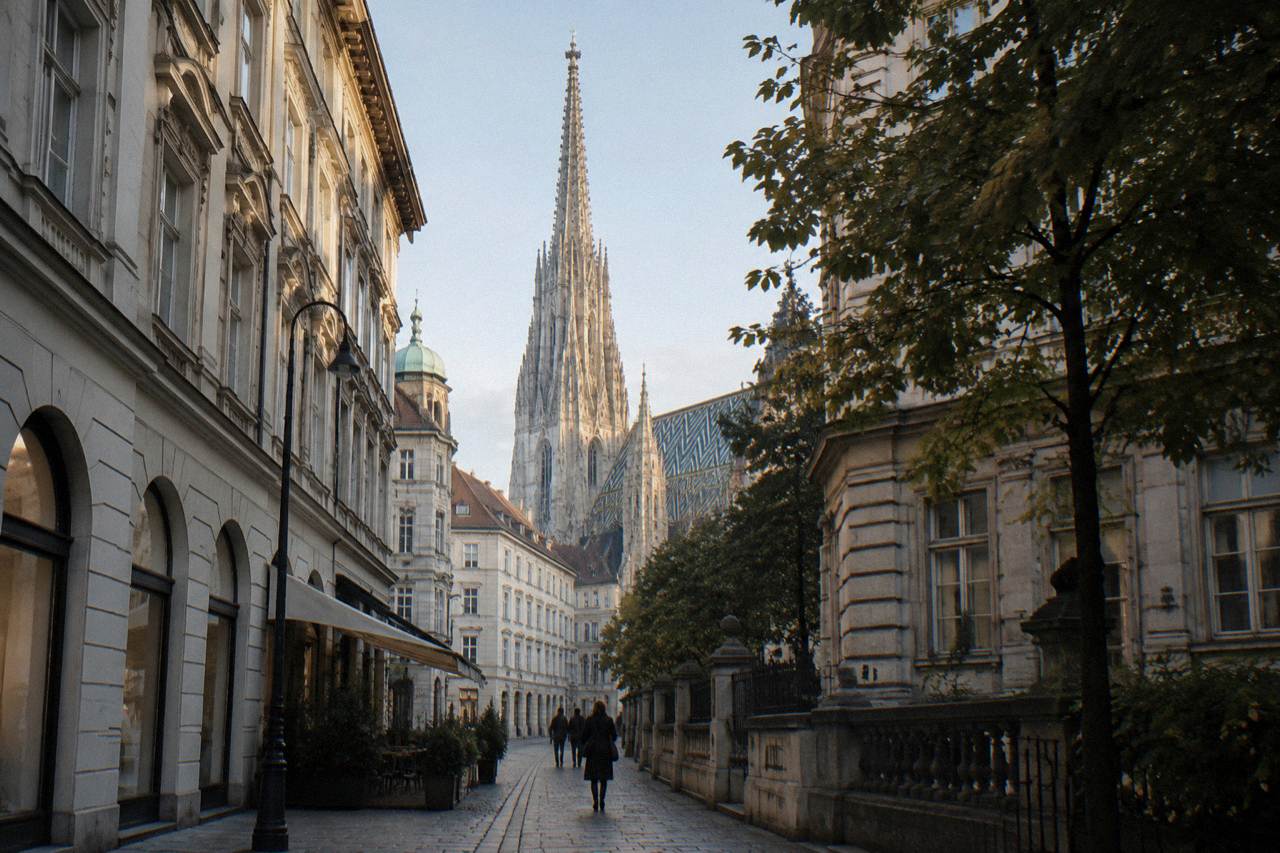
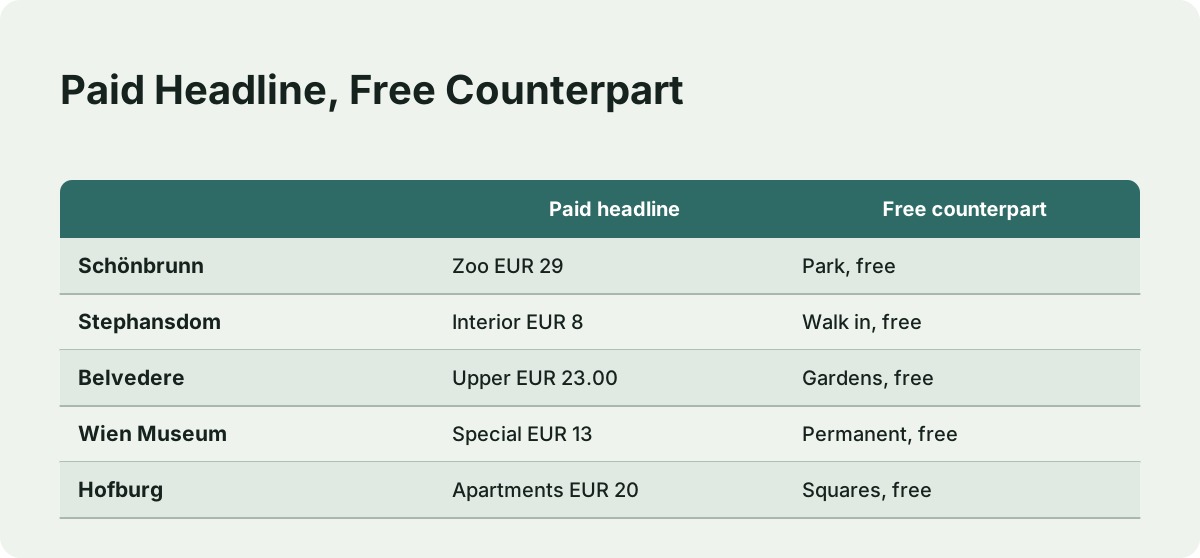
The paid side of the city is real and worth knowing precisely. The Tiergarten Schönbrunn zoo charges EUR 29 for an adult day ticket. The Karlskirche sightseeing visit is EUR 9.50. The Donauturm observation deck is EUR 18, Haus der Musik is EUR 19 for an adult, and the St. Stephen's Cathedral self-guided interior visit with audio guide is EUR 8, with the south tower, north tower lift and catacombs each another EUR 8. None of these is hidden pricing; all are published by the operators. The trap is not the prices themselves but the assumption that they are unavoidable, because in almost every case a free counterpart sits right next to the paid item. If you also want a guide, Evening Highlights Walk is a free walk to pair with it.
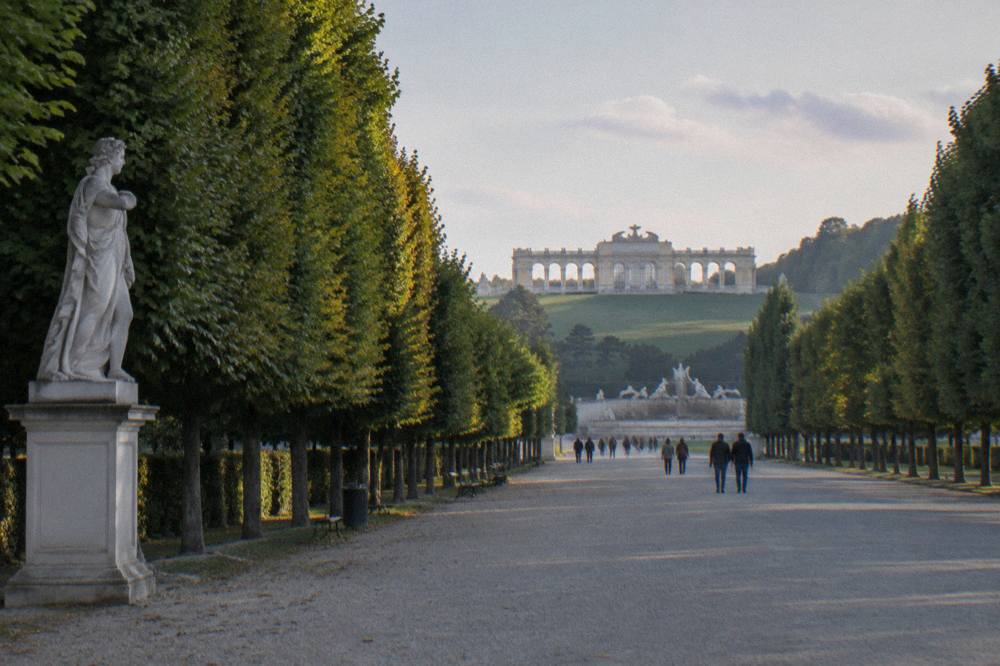
The free counterparts are the backbone of a budget trip. Schönbrunn's palace park opens its gates at 6:30 in the morning and can be entered free of charge during opening hours; the palace, the Gloriette terrace, the Maze, the Privy Garden, the Palm House, the Desert House and the zoo are the separate tickets. The Belvedere's French-style palace gardens are admission free, while the Upper and Lower Belvedere galleries are ticketed. The Hofburg's open squares, Heldenplatz, Josefsplatz, the In der Burg courtyard and Michaelerplatz, are public spaces where many Viennese picnic. A budget in Vienna is therefore less about finding cheap versions of things and more about knowing which half of each famous sight is already free. Pair this with a free walk: Good Vienna Tours, Classic Highlights.
A practical way to set your own number is to split the day into three layers. The free layer, walks, parks, squares, markets, free museum windows, is the skeleton and costs nothing. The food layer you control directly, and the markets below show how. The paid layer is the only place where a daily budget is really decided, and one or two paid interiors per trip is a perfectly good plan. Travellers who want a deeper look at the no-cost side of the city can start with the free walking tours in Vienna guide, which covers the full free-walk landscape, or the Vienna on a night budget guide for the evening hours.
How Do You Do Vienna Cheaply?
To do Vienna cheaply, book free walking tours for sightseeing, skip palace interiors in favor of the free palace parks, time museum visits to free admission windows, and rely on markets and self-catering for meals. Twelve free walking tours operate on GuruWalk and freetour.com, with the strongest drawing review pools in the thousands, so the sightseeing core can genuinely cost zero euros before tips, leaving paid choices optional rather than default.
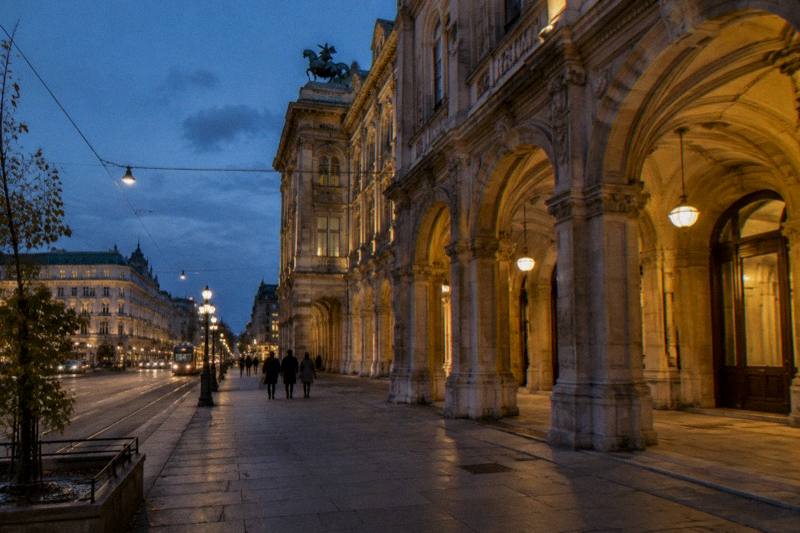
The walking tours are the engine of the cheap approach. The Part 1 Highlights walk by redandwhite.tours on GuruWalk is rated 4.73 out of 5 across 6,036 English-language GuruWalk reviews and starts at the Wiener Staatsoper; its listing names the Vienna Operahouse, Burggarten, Heldenplatz, Josefsplatz and Stephansdom along the way. Good Vienna Tours' Classic Highlights walk, rated 4.9 out of 5 across 5,854 English-language GuruWalk reviews, meets at Albertinaplatz. Both run about two hours, both operate in English and German, and both are free with a pay-what-you-want tip at the end. A traveller who does two of these walks has covered the historic centre thoroughly without a single euro of sightseeing spend. Pair this with a free walk: Part 1 Highlights, Redandwhite Tours.
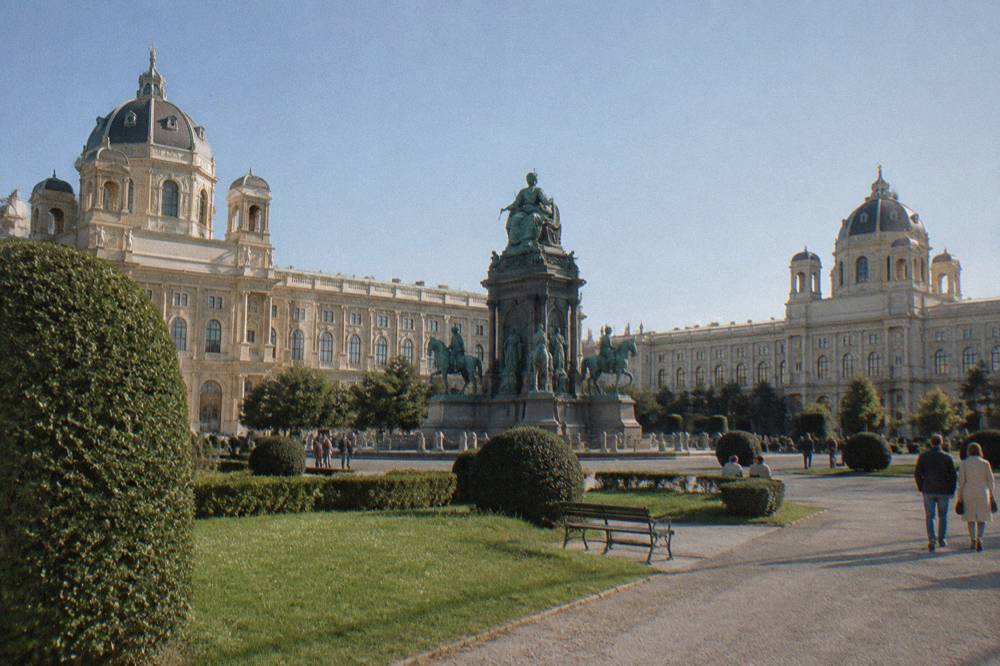
Beyond the walks, the cheap playbook has three reliable moves. First, build days around the free public ground: the Volksgarten and Burggarten beside the Hofburg, the Stadtpark with its free-viewed Johann Strauss Monument, the Augarten, and the green Prater parkland along the Hauptallee, where walking and cycling cost nothing and only the Wurstelprater rides are paid. Second, use the free museum windows rather than fighting full prices, which the next sections break down in detail. Third, drink the tap water: the City of Vienna states that its drinking fountains give everyone free refreshment with spring water, and the fountains run through the warmer months before being switched off in winter, so a refillable bottle removes a small but constant cost. If you also want a guide, Historical Spots Walk, Guide Jan is a free walk to pair with it.
| Free move | What it costs | What it replaces |
|---|---|---|
| Free walking tours on GuruWalk and freetour.com | Nothing up front, tip at the end | Paid guided city tours |
| Schönbrunn palace park | Free during opening hours | Paid palace interior visit |
| Belvedere palace gardens | Free | Paid gallery admission |
| Hofburg open squares (Heldenplatz, Josefsplatz, Michaelerplatz) | Public space | Paid Hofburg attractions |
| Wien Museum permanent exhibition at Karlsplatz | Free every day | Paid special exhibitions |
| Vienna drinking fountains | Free spring water | Bought bottled water |
The walks deserve one honest caveat: they are free to reserve, but they are not free to the guide, who is paid by the tips walkers choose to give. The amount is entirely the walker's decision and no official figure exists, so treat the tip as a real line in your own budget rather than as zero. With that accounted for, the arithmetic still lands firmly in the traveller's favour, because a two-hour guided walk of the centre with a pay-what-you-want model is cheaper than nearly any paid alternative in the city. For a full comparison of the twelve walks, including the smaller and specialist ones, the GuruWalk Vienna guide lists them side by side.
What Do Meals And Coffee Cost?
Food is always a paid layer, but the city keeps it controllable: the Naschmarkt and Brunnenmarkt let you walk the stalls for nothing and buy exactly as much as you want, while pay-what-you-want walking tours mean your sightseeing spend never competes with your food spend.
The markets are the budget eater's main lever. Walking the Naschmarkt is free, per the City of Vienna's own market page, and you pay only for food and goods; the adjacent Saturday flea market is likewise free to browse. The Brunnenmarkt, Vienna's largest street market, works the same way: free to walk, paid to buy. This structure matters because it converts eating from a fixed restaurant decision into a per-item decision. A traveller grazing a market spends in small increments and can stop exactly when the budget says stop, which a set-menu restaurant never allows.
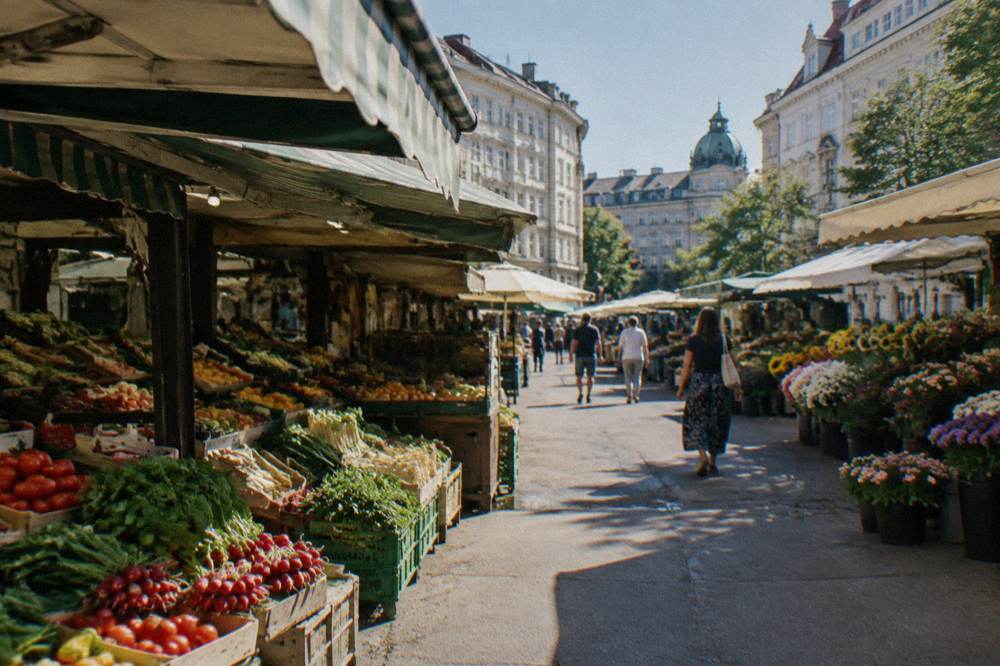
For the classic Viennese café experience, prices vary. The café culture is a paid pleasure, the market food is a controllable pleasure, and the city's free drinking fountains, which the City of Vienna says provide spring water to everyone, remove the beverage line entirely for anyone carrying a bottle. The Naschmarkt guide covers that market's free scope and its Saturday flea market in detail, including what the stall hours set by the city market office actually mean for visitors.
One evening combination is worth naming. The Peterskirche holds free daily concerts at 13:30, 15:00 and 19:00, with donations requested, so an evening can include live organ or choir music for whatever you choose to give. The Augustinerkirche's Sunday 11:00 high mass with choir and orchestra is listed with free admission. And the Hofburgkapelle's Sunday High Mass with the Vienna Boys' Choir has standing room free of charge, with tickets available from 8:30 before the mass; the seats are a separate, paid matter. None of this replaces dinner, but it replaces the paid evening entertainment that otherwise eats a budget.
How Much Is Public Transport?
Vienna's public transport, run by Wiener Linien, uses ordinary paid tickets. What the records do support is that the historic centre is compact and walkable, the free walking tours already cover the distances between major sights, and the City Card, from about EUR 19 for 24 hours per the tourist board, buys discounts rather than free entry.
The walkability point is not a slogan, it is the single biggest transport saving available. The classic sights that most visitors come for, the Stephansdom, the Hofburg squares, the Staatsoper, the Albertinaplatz, the Burggarten, sit within a walkable band of the Innere Stadt, and the free walking tours are deliberately built on exactly these distances. The 2 Hours 15 Minutes walk with guide Mirko, rated 4.94 out of 5 across 3,250 English-language GuruWalk reviews, starts at Minoritenplatz and its listing runs through the Volksgarten, Heldenplatz and Burggarten on foot. A traveller who walks the centre and reserves transit for the outer districts spends very little on moving around. A free walk worth pairing with this: 2 Hours 15 Minutes, Guide Mirko.
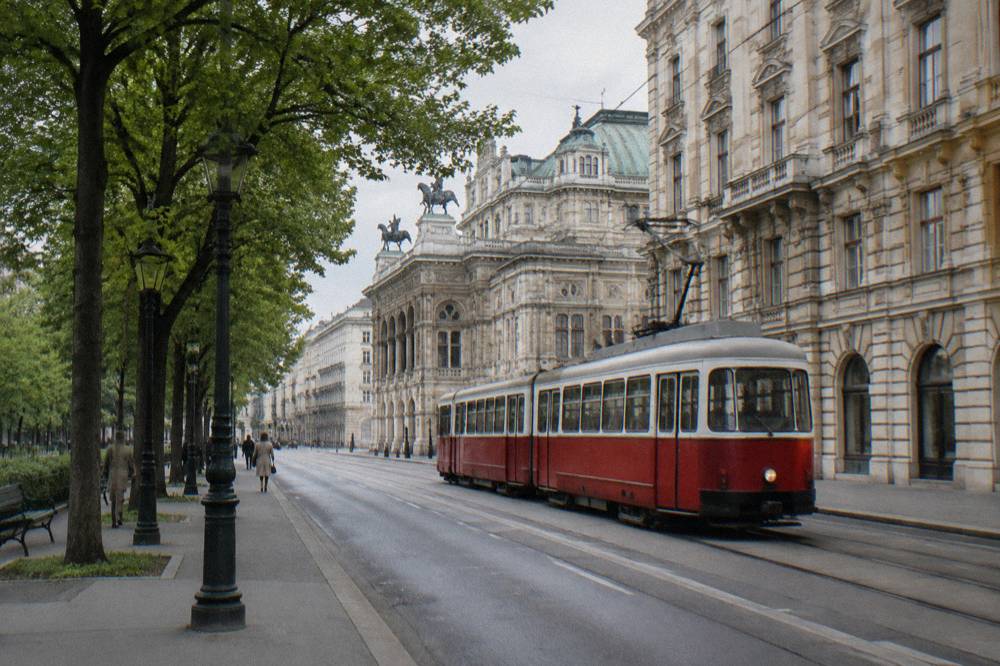
Two free services also quietly reduce transport-adjacent costs. The City of Vienna offers free public WiFi at hotspots in public places after accepting terms of use, which removes roaming pressure for navigation and tickets on the move. And the city's free drinking fountains, again per the City of Vienna, give everyone free refreshment with spring water, which matters more on long walking days than most travellers expect. Neither replaces a transit ticket, but both chip away at the small daily spends that add up.
For evenings, one paid-transport-adjacent decision deserves its own paragraph. After dark the free options narrow, but they do not disappear: the Evening Highlights Walk on freetour.com, run by Prime Tours, departs at 7 PM from Helmut-Zilk-Platz, is rated 8.5 out of 10 across 1,985 freetour.com reviews, and its listing names the Hofburg, the Spanish Riding School, the State Opera Alley Lodge and St. Stephen's Cathedral. It is the one walk in the roster with a stated start time, and because it is free to reserve with a tip at the end, it converts an evening from a spend category into a walking category. Plan the transit home around it and the evening costs whatever tip you choose. A free walk worth pairing with this: Meet The Locals Walk.
Where Does The Free Layer Save The Most?
The free layer saves the most in three places: sightseeing, where twelve free walking tours replace paid guided tours; museums, where free windows, the Wien Museum's first Sunday, the Secession's first Wednesday, the Kunsthalle's last Sunday and the under-19 rules, erase full admission; and evening entertainment, where free concerts, free masses and the freetour.com evening walk replace ticketed shows. The biggest single saving per person is the museum layer, because adult admissions start at EUR 13.
The museum windows are the highest-value timing play in the city, but they are separate schemes and must never be merged. The Wien Museum gives free entry to the permanent and special exhibitions at all of its locations on the first Sunday of every month, and its Karlsplatz permanent exhibition is free every day regardless. The Secession is free on the first Wednesday of every month, with 7 October, 4 November and 2 December 2026 on its listed dates. The Kunsthalle Wien is free on the last Sunday of every month and runs a pay-what-you-can window on Thursdays from 17:00 to 20:00. These are three different calendars, and a budget itinerary that lines up with all three can clear most of a week's museum spend.
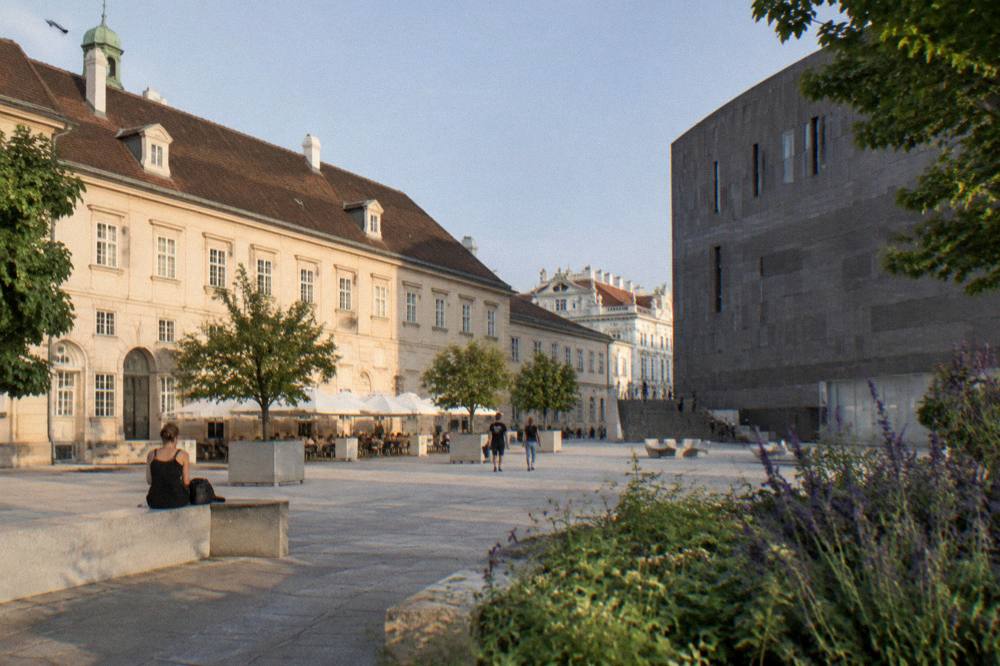
The under-19 rules are a second, permanent layer, but they are set museum by museum and must be stated that way. Verified free under 19 on the operator's own page: the Kunsthistorisches Museum, the Naturhistorisches Museum, the Albertina, the MAK, the Belvedere's Upper and Lower galleries, mumok, the Kunsthalle Wien, the Imperial Treasury, all Wien Museum sites and the Jewish Museum Vienna. Not free under 19: the Leopold Museum, where youths pay EUR 2.50, and Kunst Haus Wien, where those up to 18 pay EUR 7. Families travelling with teenagers should check each museum individually rather than assume a blanket rule, because no blanket rule exists.
| Free window | Which institutions | When |
|---|---|---|
| First Sunday of the month | All Wien Museum sites (Karlsplatz, Hermesvilla, Römermuseum, Pratermuseum, Uhrenmuseum and the rest) | Every first Sunday |
| Free every day | Wien Museum Karlsplatz permanent exhibition, musa | Always |
| First Wednesday of the month | Secession | 7 Oct, 4 Nov, 2 Dec 2026 listed |
| Last Sunday of the month | Kunsthalle Wien | Every last Sunday |
| Thursday pay-what-you-can | Kunsthalle Wien, 17:00 to 20:00 | Every Thursday |
| Under-19 free | KHM, NHM, Albertina, MAK, Belvedere, mumok, Kunsthalle, Imperial Treasury, Wien Museum sites, Jewish Museum | Always, per museum |
One more saving deserves a plain statement: the Vienna State Opera sells standing-room tickets for performances from EUR 4, sold from 10:00 on the day of the performance, with 435 standing places. This is a paid ticket, not a free one, but it is the cheapest way into one of the world's great opera houses and belongs in any budget conversation. The standing tickets guide covers the mechanics, and the can you go inside the Vienna State Opera for free post answers the adjacent question honestly.
What Should You Skip To Save Money?
Skip the Schönbrunn palace tour and walk the free park instead, skip the zoo's EUR 29 day ticket unless animals are the point of your trip, skip the St. Stephen's EUR 8 interior visit since basic entry to the cathedral is free, and skip paid guided city tours entirely because the free walks cover the same ground. Do not skip the free windows and free concerts, which cost nothing and are the city's best value.
The logic of the skip list is that Vienna's paid items are usually the enclosed version of something visible for free. The Gloriette building at Schönbrunn is visible from the free park; only its viewing terrace is ticketed. The Hundertwasserhaus can be viewed from outside the street, free, and it is a residential building with no interior visit anyway; the Kunst Haus Wien museum beside it is the paid item at EUR 16. The Wurstelprater fairground is free to walk into, open daily all day, and every ride is paid separately, so the stroll costs nothing and the rides are a per-ride decision. The Riesenrad sits in that free fairground and needs its own ticket, with no price printed here because the official ticket pages are script-rendered and no verified figure could be read.
| Paid item | Price | Free counterpart |
|---|---|---|
| Tiergarten Schönbrunn | EUR 29 adult day ticket | Free Schönbrunn palace park |
| St. Stephen's interior visit | EUR 8 adults, EUR 3 children up to 14 | Free entry to the cathedral |
| Karlskirche sightseeing | EUR 9.50 adults | Resselpark beside it, free |
| Donauturm observation deck | EUR 18 adult | Donauinsel and Alte Donau free bathing spots |
| Kunst Haus Wien | EUR 16 admission | Hundertwasserhaus viewed free from the street |
| Wiener Eistraum skating | EUR 10.50 adult, last season's list | Free walks and squares instead |
The one skip that deserves emphasis is the paid guided city tour, because the replacement is not a compromise. The Top Sights walk with a multilingual guide on GuruWalk, rated 4.47 out of 5 across 1,309 English-language GuruWalk reviews, starts at Albertinaplatz and its listing names the Wiener Staatsoper, the Albertina, the Burggarten, the Spanish Riding School, Heldenplatz, the Hofburg, the Prunksaal, the Pestsäule, Kärntner Straße and Stephansplatz, in four languages including English. It costs nothing to reserve. A paid city tour covering the same sights would be a pure loss for a budget traveller with this option on the table. A free walk worth pairing with this: Top Sights, Multilingual Guide.
Finally, do not skip the free evening and music options out of habit. The Silvesterpfad New Year's Eve Trail on 31 December runs from 2 pm until 2 am with free admission and stages including Stephansplatz, Freyung and Graben. The Vienna Philharmonic's Summer Night Concert at Schönbrunn is scheduled for 11 June 2027 with free admission and no tickets needed. The Donauinselfest on 25 to 27 June 2027 is free to enter. These are dated, verified, and free, and they belong in a budget plan more than any paid interior does. For the cold months, the free things to do in Vienna in winter guide extends the same logic.
Common Questions About Vienna On A Budget
What Is A Good Daily Budget For Vienna?
There is no single honest figure, because the free layer makes the spread enormous. A day built on free walking tours, free parks and free museum windows can cost little beyond food, while a day of zoo, palace and tower tickets adds up quickly, since the zoo alone charges EUR 29 and the Donauturm deck EUR 18. Budget for food and transport, then choose one or two paid interiors deliberately.
How Do You Do Vienna Cheaply?
Reserve free walking tours for sightseeing, use the free palace parks instead of paid interiors, time museums to the free windows and treat the markets as the food plan. Twelve free pay-what-you-want walking tours run in Vienna on GuruWalk and freetour.com, so the sightseeing core can genuinely cost zero euros before tips.
Are The Free Walking Tours In Vienna Really Free?
They are free to reserve and free to walk: you book a spot and pay the guide what you think the walk was worth at the end. The tip is the walker's choice and no official amount exists, so treat it as a real line in your own budget rather than as zero.
What Do Meals And Coffee Cost?
This site publishes no invented café or restaurant prices. The Naschmarkt and Brunnenmarkt are free to walk and paid only per purchase, the city's drinking fountains give free spring water, and the pay-what-you-want walks mean sightseeing does not compete with your food budget.
How Much Is Public Transport?
Wiener Linien runs ordinary paid tickets, with current fares listed on the Wiener Linien ticket page. The structural point is that the historic centre is compact and walkable, the free walks cover the distances between the major sights, and the Vienna City Card is a paid product, from about EUR 19 for 24 hours, that buys discounts rather than free entry.
What Should You Skip To Save Money?
Skip the paid interior where the free ground already delivers the sight: walk the free Schönbrunn park instead of touring the palace, enter St. Stephen's free instead of buying the EUR 8 interior visit, and skip paid guided city tours entirely because the free walks cover the same ground. Keep the free windows, free concerts and free events.