Is Vienna Expensive?
Is Vienna expensive? An honest answer built on verified entry rules, real museum prices, the free walking tour scene and the city's free layer of parks, squares and museum days.
How Expensive Is Vienna For Tourists?
Vienna is expensive only if you buy the ticketed layer without checking what sits beside it. The city's core sights include a large free layer: twelve free walking tours run in Vienna, listed on GuruWalk and freetour.com, the palace park at Schönbrunn costs nothing to enter during opening hours, and the Wien Museum's permanent exhibition at Karlsplatz is free every day. The final bill depends almost entirely on which Vienna you choose to pay for.
That distinction is the whole answer, so it is worth being precise about it. Vienna's headline attractions, the palace state rooms, the great galleries, the opera seats, are genuinely priced like a major European capital. The Kunsthistorisches Museum charges adults EUR 22 online and EUR 24 on site. The Albertina charges EUR 20.90. A seat at the Hofburgkapelle Sunday mass runs from EUR 14 for a listening ticket up to EUR 52. Nobody should arrive expecting a cheap city at that layer.
But the same streets carry an unusually deep free layer, and it is not made of second-tier leftovers. Heldenplatz, Josefsplatz, the In der Burg courtyard and Michaelerplatz are public spaces around the Hofburg, described by the Vienna Tourist Board as places where Viennese actually picnic. The Belvedere palace gardens are admission free while the galleries inside charge. The green Prater and the Hauptallee are open public ground. Even the guided walk through the old centre, normally the first paid item on any city break, is free here: you reserve a spot, walk, and pay the guide what you think the walk was worth at the end. A free walk worth pairing with this: Good Vienna Tours, Classic Highlights.
The hero of that free layer is the Part 1 Highlights walk from redandwhite.tours, which starts at the Wiener Staatsoper and covers the Burggarten, Heldenplatz, Josefsplatz and the Stephansdom over about two hours. It is rated 4.73 out of 5 across 6,036 English-language GuruWalk reviews, one of the largest English review pools of any free walk in the city, and it runs in English and German.
Two other walks fill out the same budget slot at different hours and angles. The Evening Highlights Walk from Prime Tours is the one freetour.com listing among the twelve, starting at Helmut-Zilk-Platz and covering the Hofburg, the Spanish Riding School, the State Opera Alley Lodge and St. Stephen's Cathedral in the evening, rated 8.5 out of 10 across 1,985 freetour.com reviews. The Meet the Locals Walk from Absolute Vienna Tours, rated 4.56 out of 5 across 2,189 GuruWalk reviews, starts at Albertinaplatz and leans on the lived-in city rather than the postcard set. Between them, a visitor can cover Vienna's centre, its evening face and its local side without a single fixed cost. A free walk worth pairing with this: Meet The Locals Walk.
This site, Free Things To Do In Vienna, exists because that free layer is wide enough to plan whole days around. The rest of this page prices the paid layer honestly, using figures verified against each operator's own pages, and marks exactly where the free layer changes the arithmetic.
What Do Meals And Coffee Cost?
Meals and coffee in Vienna cost as much or as little as you let them: browsing the Naschmarkt is free, the Saturday flea market is free to wander, and the city's drinking fountains serve free spring water across Vienna, so your final bill depends almost entirely on which Vienna you choose to pay for.
That honesty matters, because the internet is full of confident Vienna coffee prices that no official source stands behind. Rather than repeat one, it is more useful to describe what is actually verified about eating and drinking cheaply in the city.
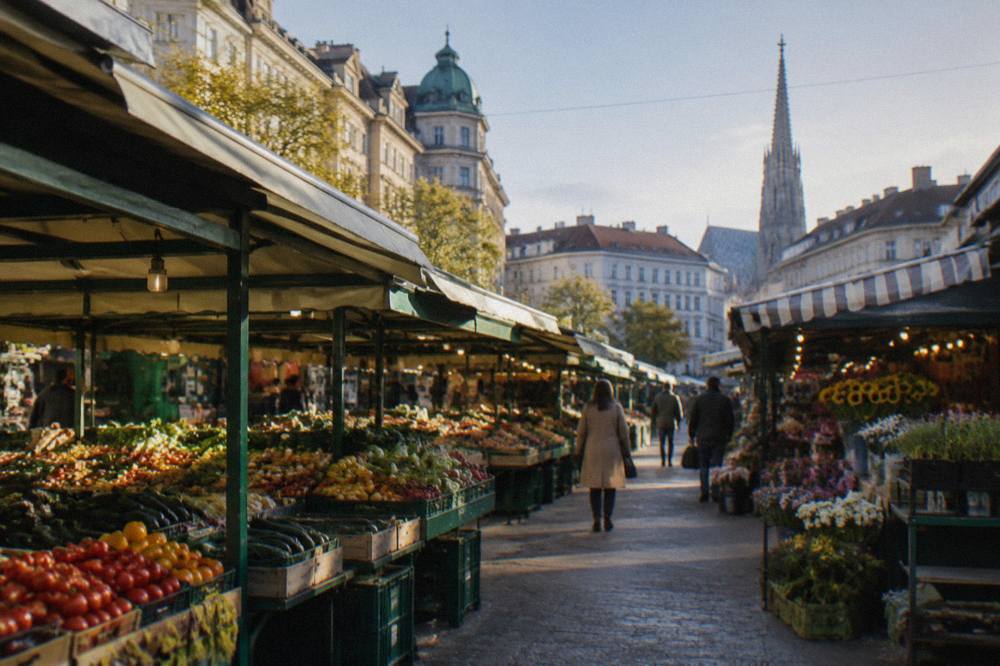
The Naschmarkt is the structural answer. Walking the market is free, and the Vienna Tourist Board lists it among sights with free admission; you pay for food and goods, and nothing else. That means the market doubles as a sight and a place to control spend: stall prices are visible before you commit, unlike a seated restaurant, and the city market office sets the stall hours. On Saturdays the adjacent flea market adds browsing at no charge, with purchases paid per stall. The same pattern holds at the Brunnenmarkt, Vienna's largest street market, listed by the Tourist Board among free-admission sights.
Two city services quietly cut daily costs further. Vienna's drinking fountains give everyone free refreshment with spring water, per the City of Vienna, though the fountains are switched off in winter to prevent freezing. And the city's public WiFi network, StadtWien-PublicWLAN, offers free access at hotspots in public places after accepting terms of use, which removes roaming pressure from a day of navigation.
| Item | Cost status | Condition |
|---|---|---|
| Walking the Naschmarkt | Free | Purchases at stalls and restaurants are paid |
| Naschmarkt Saturday flea market | Free to browse | Saturday only, purchases paid |
| Brunnenmarkt | Free to walk | Purchases paid |
| Drinking fountains | Free spring water | Switched off in winter |
| Public WiFi (StadtWien-PublicWLAN) | Free | Terms of use accepted |
The pattern to notice is that Vienna's food costs are almost entirely discretionary. Entry to the market costs nothing, the water costs nothing, and the money is spent only where you choose to spend it. The Naschmarkt guide covers the market and its Saturday flea market in detail, and the Vienna on a budget guide builds full days around the same logic.
How Much Is Transport?
Transport is the one line where this page's verified data is thin, so the honest answer is structural: the Vienna City Card is a paid product, from about EUR 19 for 24 hours per the Tourist Board, and it buys transport plus discounts, not free entry. Beyond the card, Vienna's centre is compact enough that the free layer mostly removes the need for tickets, because the walks, parks and squares sit within walking distance of each other.
The centre genuinely is that tight. The walks listed above all start within a few minutes of each other: the Wiener Staatsoper, Albertinaplatz, Minoritenplatz and Helmut-Zilk-Platz are all inside or on the edge of the Innere Stadt. A visitor who books a free walk each morning can reach every meeting point on foot from almost any central hotel, which reduces the transit question to airport transfer and the occasional trip to Schönbrunn or the Prater. The question of how walkable Vienna is has its own full answer on this site.
The 2 Hours 15 Minutes walk with guide Mirko shows how much ground a single free walk can absorb. It starts at Minoritenplatz and covers the Volksgarten, Heldenplatz, the Burggarten, Albertinaplatz and Stephansplatz U, rated 4.94 out of 5 across 3,250 English-language GuruWalk reviews, the highest rating of any large-pool walk in the city's roster. In English only, it stitches together the palace district's parks and squares, the same ground a paid hop-on bus commentary would charge to point out. If you also want a guide, 2 Hours 15 Minutes, Guide Mirko is a free walk to pair with it.
On the paid side, the one verified figure is the Vienna City Card itself. The Vienna Tourist Board prices it from about EUR 19 for 24 hours, and it is a paid product giving transport and discounts, not free entry to sights. The question of whether the Vienna Card is worth it has a dedicated breakdown on this site, and the honest summary here is that the card only pays for itself against the ticketed layer, never against the free one.
If the plan is a centre-based trip built on free walks and free parks, transport can be close to a rounding error. If the plan is Schönbrunn, the Belvedere galleries and a concert seat, the card enters the calculation alongside those tickets.
Is Vienna Cheaper Than Prague Or Budapest?
Verified numbers cover Vienna only. What the data does support is a structural comparison: Vienna's distinguishing feature is not a lower price level but a wider verified free layer, twelve free walking tours, a museum scheme with a free first Sunday, and free palace parks.
That framing is not a dodge, it is the useful answer. Travellers comparing the three capitals usually compare hotel rates and beer prices, and those comparisons float free of what actually distinguishes the cities. Vienna has built free access into its official structure in a way that is easy to check and easy to use.
The Wien Museum scheme is the clearest example. On the first Sunday of every month, every Wien Museum site, Karlsplatz, the Hermesvilla, the Römermuseum, the Pratermuseum, the Uhrenmuseum, the Beethoven Museum, the Haydnhaus and the rest, gives free entry to permanent and special exhibitions, and under-19s are free every day at those sites. The permanent exhibition at Karlsplatz is free every single day, no condition at all. Two other institutions run their own free days: the Secession is free on the first Wednesday of each month, and Kunsthalle Wien is free on the last Sunday, sponsored by the Dorotheum, plus pay-what-you-can on Thursday evenings.
No other capital in the region publishes a comparable stack of free days across a whole museum group, and that is the honest basis for comparison. Whether Prague or Budapest is cheaper per pint is outside this page's data; whether Vienna can be done at near-zero cost for entry and guiding is not, because the records answer it directly.
The comparison also depends on season. Vienna's calendar carries verified free events that other cities would ticket: the Silvesterpfad New Year's Trail on 31 December is free to enter, the Donauinselfest in June is free for all visitors, and the Vienna Philharmonic's Summer Night Concert at Schönbrunn on 11 June 2027 needs no ticket at all. A visitor who times a trip against that calendar is comparing a different product, not just a different price.
Where Does Free Entry Change The Answer?
Free entry changes the answer at exactly the places where the free and paid layers share an address. Entering the Stephansdom is free while the cathedral sells an EUR 8 sightseeing visit. The Schönbrunn park is free while the palace and the zoo at EUR 29 are separate tickets. The Belvedere gardens are free while the galleries charge adults EUR 23 and EUR 20 day-current. Knowing which side of each address you stand on is the budget skill. If you also want a guide, Part 1 Highlights, Redandwhite Tours is a free walk to pair with it.
These are the traps that catch visitors who heard "Schönbrunn is free" and bought nothing else. The verified rules, per operator, are these.
At St. Stephen's Cathedral, you may walk into the cathedral without paying, but the cathedral's own FAQ says some areas inside can only be seen for a fee, and the cathedral sells an EUR 8 self-guided sightseeing visit with an audio guide. The south tower, the north tower lift and the catacombs are each EUR 8 for adults on their own tickets. The free entry and the paid visit are two different products at the same door, and the cathedral does not publish which interior areas the free entry covers. A free walk worth pairing with this: Evening Highlights Walk.
At Schönbrunn, the park gates open at 6:30 am and the park can be entered free of charge during opening hours, while the Privy Garden, the Maze, the Gloriette terrace, the Palm House, the Desert House, the palace state rooms and the Tiergarten zoo are each separately ticketed, the zoo at EUR 29 for an adult day ticket. The park is a real sight in itself, but the palace's famous interiors are never included in it.
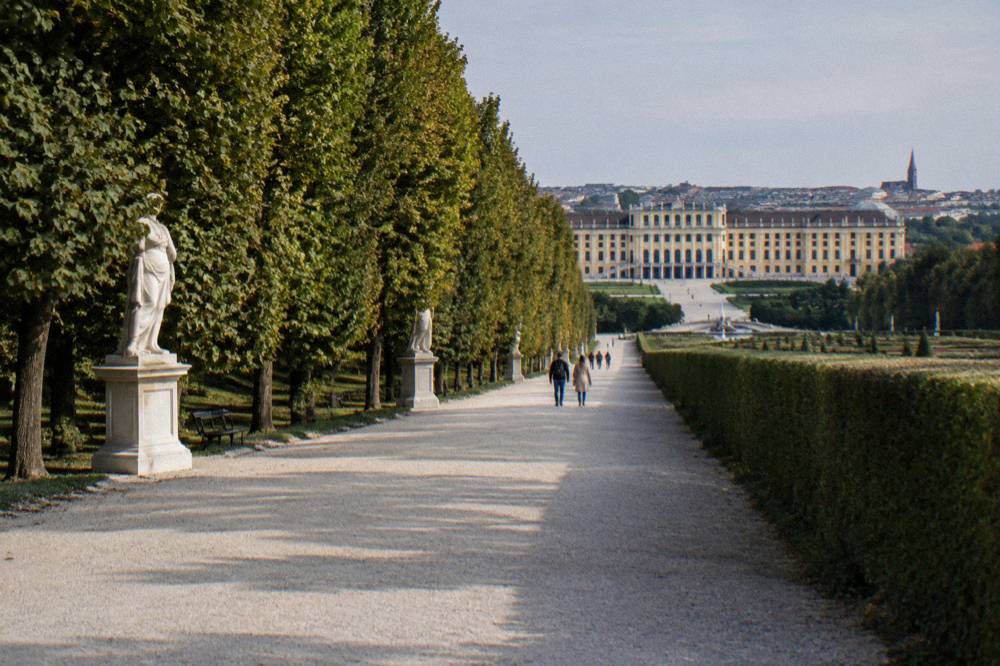
At the Belvedere, the French-style palace gardens are admission free, and the Belvedere 21 sculpture garden is free during museum opening hours, while the Upper and Lower Belvedere galleries charge, EUR 23 and EUR 20 for adults on the day the page was read, with children and youth under 19 free. The Privy Garden needs a gallery ticket and the Alpine Garden is a separate EUR 4.50 seasonal ticket.
The under-19 rules are the other place where free entry changes the arithmetic, and they must be read museum by museum. The Kunsthistorisches Museum, the Naturhistorisches Museum, the Albertina, the MAK, the Belvedere, the mumok, the Kunsthalle Wien, the Imperial Treasury, the Wien Museum sites and the Jewish Museum Vienna all state free under-19 rules on their own pages. The Leopold Museum does not: youths under 19 pay EUR 2.50 there, and only children under 7 are free. Kunst Haus Wien charges EUR 7 up to 18, free only up to 10. There is no blanket rule, and treating one museum's policy as the city's policy is how families misbudget.
| Sight | Free part | Paid part |
|---|---|---|
| Stephansdom | Entering the church | EUR 8 sightseeing visit, EUR 8 per tower, EUR 8 catacombs |
| Schönbrunn | Palace park during opening hours | Palace, zoo EUR 29, Gloriette, Maze, Privy Garden, Palm and Desert House |
| Belvedere | Palace gardens, Belvedere 21 sculpture garden | Galleries EUR 23 / EUR 20 day-current, Alpine Garden EUR 4.50 |
| Wien Museum Karlsplatz | Permanent exhibition, every day | Special exhibitions EUR 13/11 or 9/7, free first Sunday |
| Hofburg area | Heldenplatz, Josefsplatz, courtyards, Michaelerplatz | Sisi Museum EUR 20, Treasury EUR 16 online |
The full breakdown of every free museum rule, including the first-Sunday scheme and the under-19 exceptions, is in the free museums in Vienna guide, with the first Sunday scheme mapped site by site. The official admission pages carry the same rules at source: the Wien Museum visitor information page, the Schönbrunn opening times page and the city's Naschmarkt page are the primary records behind this page's figures.
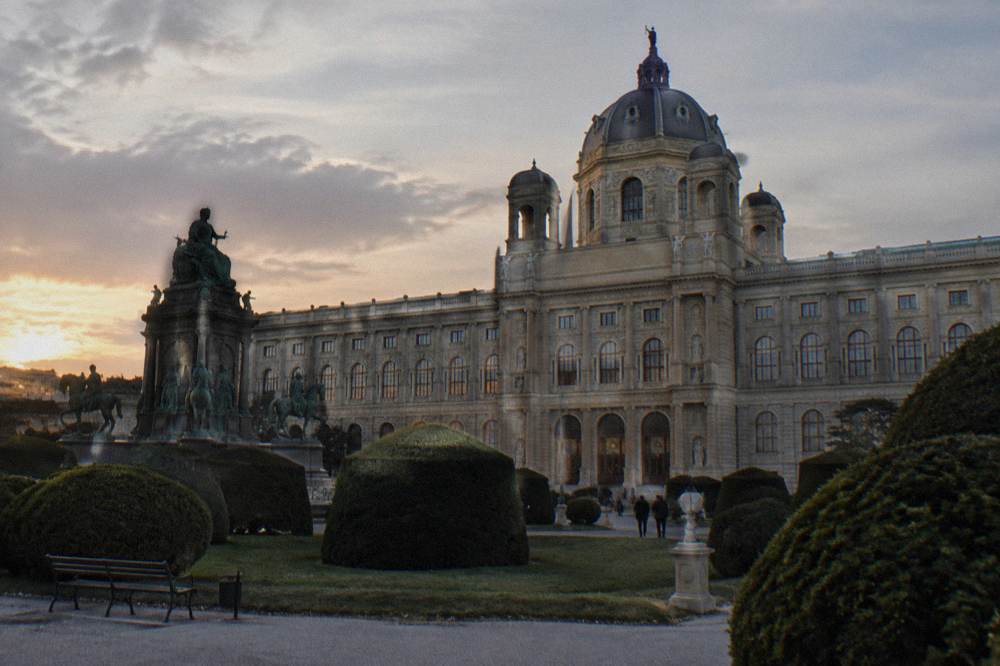
One last cost decision sits outside the entry rules: how you see the city at all. Beyond the three walks already covered, the free roster includes walks that replace paid guiding in the city's historic quarters. The Historical Spots Walk with guide Jan starts at the Albertina and covers the Hofburg and Heldenplatz area, the Volksgarten, Minoritenplatz and the Freyung, rated 4.93 out of 5 across 60 English-language GuruWalk reviews. The Good Vienna Tours classic highlights walk starts at Albertinaplatz and covers the opera, the National Library, Heldenplatz, Michaelerplatz and the Stephansdom, rated 4.9 out of 5 across 5,854 English-language GuruWalk reviews. And for the darker history, the Jewish Traces walk from redandwhite.tours covers Hoher Markt, the Judengasse, Seitenstettengasse, Morzinplatz and the Judenplatz Holocaust Memorial, rated 4.88 out of 5 across 2,513 English-language GuruWalk reviews.
Common Questions About Vienna Costs
Is Vienna Expensive?
Vienna is expensive at the ticketed layer, with galleries at EUR 20 or more and palace interiors separately priced, but it carries a large verified free layer: twelve free walking tours, free palace parks, free museum days and a free permanent exhibition at the Wien Museum. The trip costs what the balance of those two layers costs.
How Expensive Is Vienna For Tourists?
Counting only verified figures: the Kunsthistorisches Museum is EUR 22 online for adults, the Albertina EUR 20.90, the Belvedere galleries EUR 23 and EUR 20 day-current, and the Schönbrunn zoo EUR 29. Against that, the free walking tours, the Hofburg squares, the Belvedere gardens and the Schönbrunn park cost nothing, so two visitors can spend very different amounts on the same streets.
What Do Meals And Coffee Cost?
What is verified: browsing the Naschmarkt and the Brunnenmarkt is free, the Saturday flea market is free to wander, and the city's drinking fountains serve free spring water, switched off in winter.
How Much Is Transport?
The one verified transport figure is the Vienna City Card, a paid product from about EUR 19 for 24 hours per the Tourist Board that buys transport and discounts, not free entry. For a centre-based trip, the free walking tours all start within a short walk of each other, so transit can be a small part of the budget.
Is Vienna Cheaper Than Prague Or Budapest?
Structurally, Vienna's distinction is its verified free layer: a museum group with a free first Sunday, twelve free walking tours and free palace parks, which the other two capitals do not match at the level of official, published rules.
Where Does Free Entry Change The Answer?
At every address where free and paid share a door: entering the Stephansdom is free while the sightseeing visit and both towers cost EUR 8 each, the Schönbrunn park is free while the zoo costs EUR 29, and the Belvedere gardens are free while the galleries charge. Reading each sight's own rule is the whole budget skill.