Is Vienna Walkable?
Is Vienna walkable? A practical answer for walkers, covering which districts work on foot, when the U-Bahn earns its fare, how long the centre takes to cross, and which free walking tours cover the ground.
Vienna was laid out as an imperial residence city, and that history shows in its street plan. The old town sits inside the Ringstrasse, the grand boulevard that rings the historic centre, and nearly every famous landmark a first-time visitor wants sits inside or just outside that ring. Twelve free walking tours run in Vienna, listed on GuruWalk and freetour.com, and the fact that so many operators can make a business of two-hour city-centre routes says something about how walkable the core is. The honest answer has a second half, though, because Schönbrunn, the Prater's far end, the Zentralfriedhof and the Vienna Woods all sit outside comfortable walking range of the centre, and pretending otherwise leads to sore feet by day three.
Is Vienna A Walkable City?
Yes, in the sense that matters to a visitor: Vienna's core sights are packed tightly together, the main sightseeing districts are flat, and the city maintains broad pavements, pedestrian streets and formal parks that make walking the default way to see them. The Innere Stadt, the Hofburg quarter and the Ringstrasse museums all sit within a 30 minute walk of each other. The limits appear at the edges, where palace grounds, cemeteries and hillside woods stretch beyond the ring.
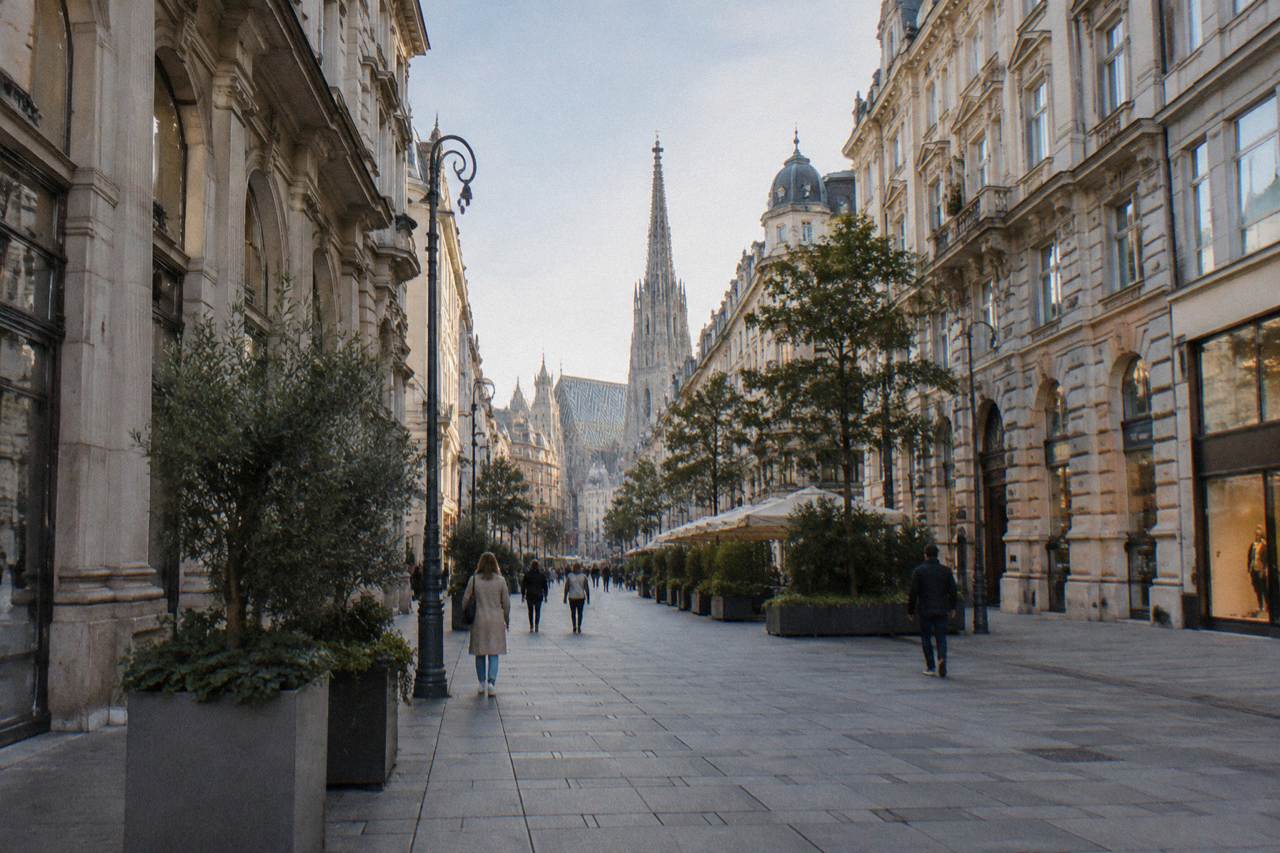
The geography is unusually generous. The Innere Stadt, Vienna's first district, is roughly two kilometres across at its widest point, and it contains the Stephansdom, the Graben, the Hofburg's open squares, the Peterskirche and the Hoher Markt within that small area. Nothing in the core requires a climb; the terrain along the Danube canal and the Wien river is flat, and the only slopes a walker normally meets are the landscaped hills of palace gardens.
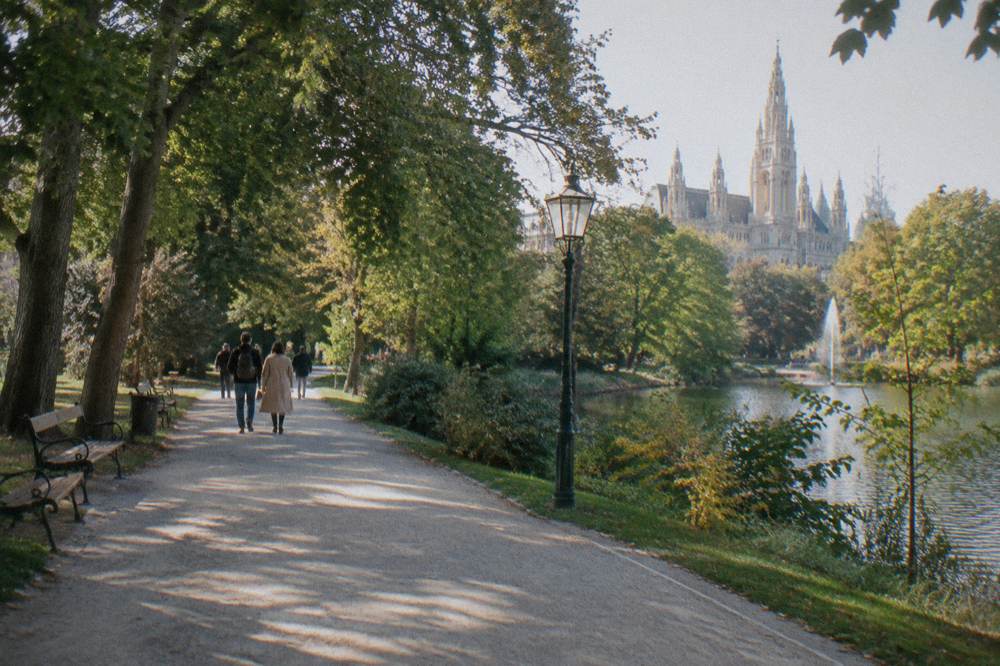
The city also designs for pedestrians rather than merely tolerating them. Kärntner Straße and the Graben, the two main shopping arteries, are pedestrianised, as is large parts of the Mariahilfer Straße further west. The Ringstrasse carries traffic but keeps wide tree-lined walkways on both sides, and the parks threaded along it, the Burggarten, the Volksgarten and the Stadtpark, are public green space with no entry charge, so a walk between sights doubles as a walk through gardens. A free walk worth pairing with this: Top Sights, Multilingual Guide.
There is a useful comparison to make with other capitals. Vienna's sightseeing core is compact in the way Prague's or Salzburg's is, not sprawling in the way London's or Berlin's is. A visitor who bases themselves anywhere between the Staatsoper and Stephansplatz can walk to essentially every major sight in the first district and most of the Ringstrasse museums without ever boarding a train. That single fact shapes most itineraries, and it is why the free walking tour scene here is so dense: guides can cover the highlights in two hours on foot because the highlights genuinely sit two hours apart.
The three most established English-language walks illustrate the density. Part 1 Highlights by redandwhite.tours, rated 4.73 out of 5 across 6,036 English-language GuruWalk reviews, starts at the Wiener Staatsoper and reaches the Stephansdom via the Burggarten, Heldenplatz and Josefsplatz, all inside the ring. Good Vienna Tours' Classic Highlights, rated 4.9 out of 5 across 5,854 GuruWalk reviews, starts at Albertinaplatz and covers the Staatsoper, the Austrian National Library, Heldenplatz, Michaelerplatz, the plague column and the Stephansdom in the same two hours. These routes work because the city works. A free walk worth pairing with this: Part 1 Highlights, Redandwhite Tours.
The compactness is not an accident of geography alone. The Ringstrasse concentrates the monumental city into a single walkable band of museums, parliament and university buildings, and that band has been kept intact. For a walker, the practical consequence is simple: distances in the core are measured in minutes, not metro stops, and the biggest risk is over-scheduling rather than exhaustion.
Which Areas Are Best On Foot?
The Innere Stadt, the Hofburg quarter, the Ringstrasse park belt and the MuseumsQuartier are the areas where walking beats every other option, because they are flat, pedestrian-friendly and dense with sights. The Donaukanal adds a free street-art corridor just outside the ring, and the Belvedere gardens link two palace fronts on foot. Naschmarkt and the Wurstelprater entrance are walkable too, though they sit at the ring's edges and reward a tram or U-Bahn leg to reach comfortably.
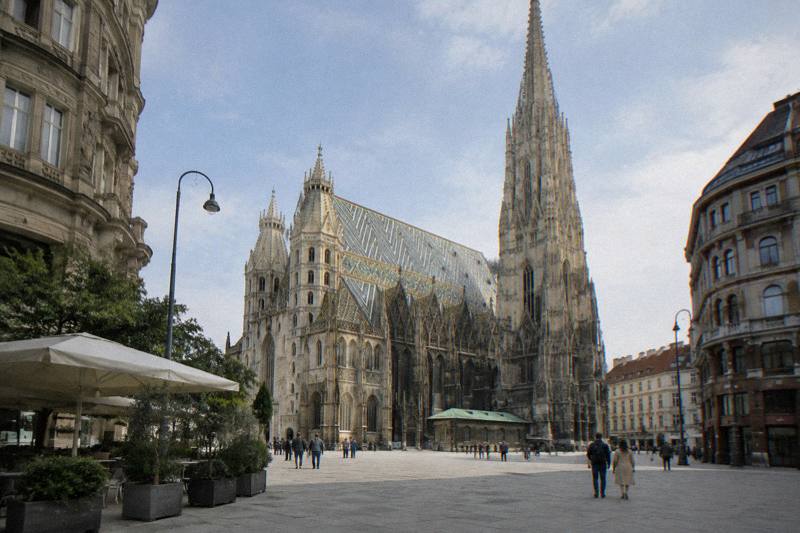
Start with the Innere Stadt, because everything there is a two-minute walk from something else. The Stephansdom, the Graben, the Peterskirche and the Hoher Markt with the Ankeruhr clock form one connected cluster; a walker can see all four in under an hour without hurrying. Entering the cathedral is free, though the cathedral also sells a paid sightseeing visit of the interior, and the towers and catacombs are separate tickets, so the free walk past the exterior costs nothing at all.
The Hofburg quarter is the second cluster, and it is arguably even better walking country. The open squares and courtyards around the Hofburg, Heldenplatz, Josefsplatz, the In der Burg courtyard and Michaelerplatz, are public spaces where many Viennese picnic on the meadow at Heldenplatz, as the Vienna Tourist Board's own palace page describes. Walking through them costs nothing; only the museums inside, the Sisi Museum, the Imperial Treasury and the Spanish Riding School, are ticketed. The adjacent Burggarten and Volksgarten are public parks with no entry charge, so a route from the Staatsoper to the Ringstrasse can run entirely through gardens. Pair this with a free walk: Historical Spots Walk, Guide Jan.
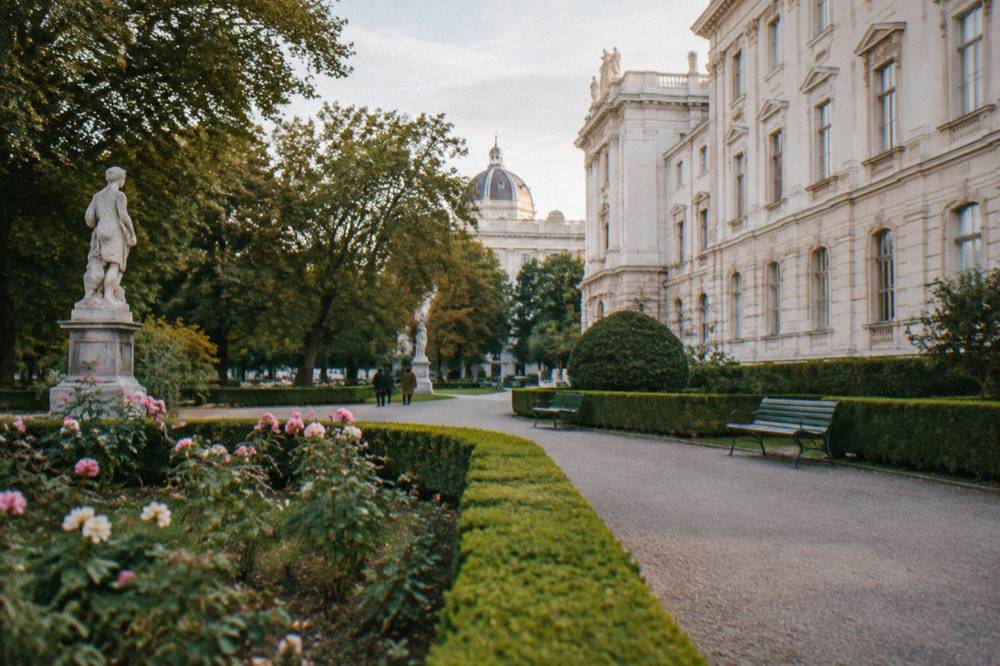
The MuseumsQuartier sits a short walk west of the Hofburg, and its courtyards are freely accessible even though the Leopold Museum, mumok and Kunsthalle Wien inside each charge their own admission. The nearby Volksgarten and the Burggarten connect this museum block back to the Hofburg, which means a walker can cover the imperial palace, two public gardens and a museum campus in one continuous stroll. The Donaukanal, a few minutes east of the ring, adds something different: the walkway and the street art along the canal are public, and the city-backed legal walls are marked with a Viennese dove, per the tourist board's street art guide.
One walk covers this ground efficiently. The Top Sights walk by Prime Tours, rated 4.47 out of 5 across 1,309 English-language GuruWalk reviews, starts at Albertinaplatz and its route takes in the Wiener Staatsoper, the Albertina, the Burggarten, the Spanische Hofreitschule, Heldenplatz, the Hofburg, the Prunksaal of the Austrian National Library, the plague column, Kärntner Straße and Stephansplatz. It runs two hours in English, German, Spanish and Italian, it is listed on GuruWalk, and it is free with pay what you want at the end. The Top Sights, Multilingual Guide walk is a sensible pick for a first day precisely because it stitches the best walking quarter together in one route. Pair this with a free walk: Good Vienna Tours, Classic Highlights.
Beyond the ring, the Belvedere gardens connect the Upper and Lower Belvedere on foot and are admission free, though the galleries themselves are ticketed. The green Prater parkland and its Hauptallee are open public ground with cycling permitted, and walking into the Wurstelprater fairground is free, with only the rides and the Riesenrad paid. The Naschmarkt is free to walk, and its Saturday flea market is free to browse. These are walking areas, but they sit at or beyond the ring's edge, which is where the transport question begins.
When Do You Need Public Transport?
You need public transport for Schönbrunn, the Zentralfriedhof, the far Prater and the Vienna Woods trails, and for any hotel-to-centre trip that starts outside the ring. Schönbrunn's park is free to enter during opening hours but sits well west of the centre, and the city's 14 signposted Stadtwanderwege in the Vienna Woods are deliberately reachable by public transport because they are not walkable from town. Inside the ring, transport is a convenience, not a necessity.
Schönbrunn is the clearest case. The palace park gates open at 6:30 am and the park can be entered free of charge during opening hours, but the palace, the Gloriette terrace, the Maze, the Privy Garden, the Palm House, the Desert House and the zoo are all separate tickets. The walkability question is about distance: the palace grounds sit roughly eight kilometres from Stephansplatz, and while a determined walker could reach them along the Mariahilfer Straße, the U-Bahn does it in a fraction of the time. The park itself rewards hours of walking once you arrive, so the sensible plan is transit out, walking within. The rest of the planning pages sit on Free Things To Do In Vienna.
The Vienna Woods are the same logic at larger scale. The City of Vienna maintains 14 signposted hiking routes, the Stadtwanderwege, ranging from 4 to 22.9 kilometres, and the city's own hiking page presents them as reachable by public transport, which is an honest admission that they lie beyond walking range of the centre. The Kahlenberg and Leopoldsberg hills above the Danube fall into this category too, and the trails themselves are the city's own signposted routes.
The Zentralfriedhof, Vienna's vast Central Cemetery, is free to enter according to the cemetery operator, but it lies in the city's far south-east, well past the point where walking from the centre makes sense. The Donauinsel, a 21-kilometre recreational island with free natural bathing spots marked by the city's bathing guide, is another transit-then-walk destination. The Augarten in the second district is a partial exception: the park is free to enter and close enough that many walkers reach it on foot from the Praterstern side.
Here is the practical split in one view.
| Destination | Walking from the centre | Free once there | Best approach |
|---|---|---|---|
| Innere Stadt sights | Yes, everything is minutes apart | Most exteriors and squares are free | Walk |
| Hofburg squares and gardens | Yes, a single connected route | Squares, Burggarten and Volksgarten are free | Walk |
| MuseumsQuartier | Yes, west of the Hofburg | Courtyards free, museums ticketed | Walk |
| Donaukanal street art | Yes, just outside the ring | Walkway and legal walls are public | Walk or one U-Bahn stop |
| Belvedere gardens | Borderline, at the ring's south edge | Gardens free, galleries ticketed | Walk or tram |
| Schönbrunn park | No, roughly eight kilometres out | Park free during opening hours, palace and extras ticketed | U-Bahn |
| Zentralfriedhof | No, far south-east | Entry free | Tram or S-Bahn |
| Vienna Woods trails | No, designed for transit access | Trails free, viewpoints not claimed | Bus or train then walk |
The rule of thumb that falls out of this table: if your destination is a palace interior, a cemetery or a hillside, take transit; if it is a square, a garden or a market, walk. Budget-wise, the walking core is also the free core, which is why the question of walkability and the question of cost converge in Vienna. Is Vienna expensive? covers related ground: the compact centre is also where the free concentration sits.
One caution worth stating plainly: do not let the compactness trick you into walking Schönbrunn's grounds and then walking back. The park is large, the Gloriette hill sits at its far end, and the return to the centre is a transit trip. Vienna rewards walkers inside the ring and transit users outside it, and the visitors who enjoy the city most are the ones who accept that split early.
How Long Does A Walk Across The Centre Take?
A diagonal walk across the sightseeing core, from the Staatsoper to Stephansplatz, takes most walkers around 20 to 30 minutes without stops, and a full loop of the Innere Stadt with the Hofburg quarter takes about two hours at a sightseeing pace. That two-hour figure is not an estimate invented for this page; it is the duration nearly every established free walking tour in Vienna lists, because two hours is what the core's geometry supports.
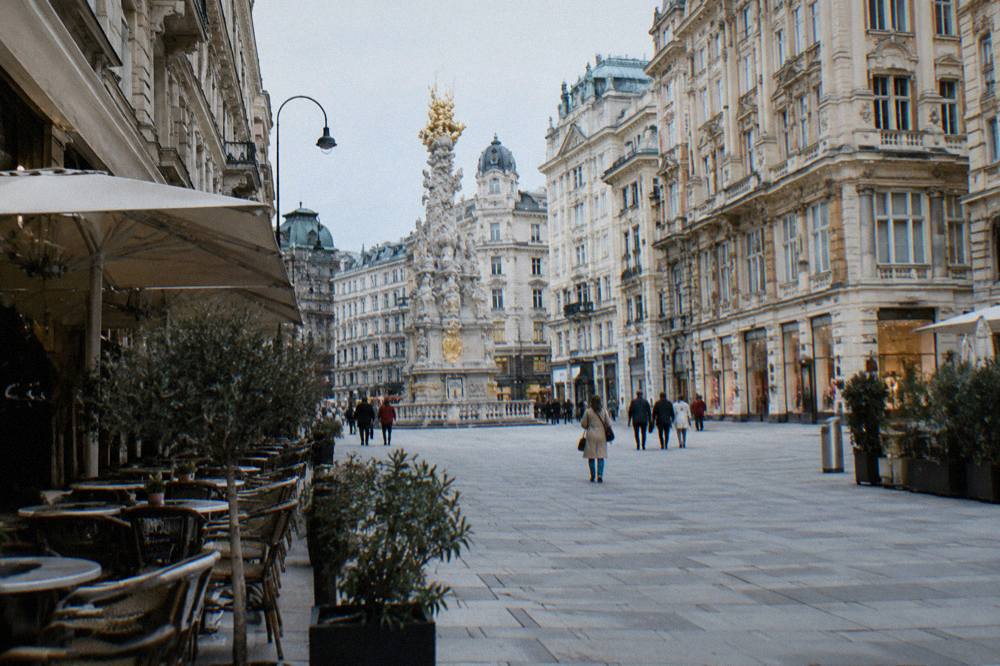
The 20 to 30 minute Staatsoper-to-Stephansplatz figure covers roughly one and a half kilometres through the densest sightseeing stretch, past the Burggarten, Heldenplatz and Kärntner Straße. A slower pace, photo stops and detours into courtyards easily double it, which is fine, because the detours are the point. The Graben alone, the broad pedestrian avenue that runs from the plague column toward the Stephansdom, is built for lingering.
The two-hour loop is the more useful number, because it matches how the tours are actually built. Part 1 Highlights by redandwhite.tours runs two hours from the Wiener Staatsoper through the Burggarten, Heldenplatz, Josefsplatz and on to the Stephansdom. The 2 Hours 15 Minutes walk with guide Mirko, rated 4.94 out of 5 across 3,250 English-language GuruWalk reviews, runs slightly longer from Minoritenplatz through the Volksgarten, Heldenplatz, Burggarten and Albertinaplatz to Stephansplatz. Good Vienna Tours' Classic Highlights covers its longer stop list, the Staatsoper, the Austrian National Library, the Schweizerhof, Heldenplatz, the Sisi Museum, Michaelerplatz, the plague column and the Stephansdom, in the same two hours from Albertinaplatz. Three operators, three routes, one duration: the core is a two-hour object. If you also want a guide, 2 Hours 15 Minutes, Guide Mirko is a free walk to pair with it.
For planners, this converts directly into itineraries. A Vienna in a day plan works on foot precisely because the core loop fits a morning and the ring walk fits an afternoon. Add the Donaukanal and the Belvedere gardens and you have a full walking day that never requires a ticketed ride, though the transit legs to Schönbrunn or the Woods would break the streak.
The distances hold up in the evening too. The Evening Highlights Walk by Prime Tours, listed on freetour.com and rated 8.5 out of 10 across 1,985 freetour.com reviews, starts at Helmut-Zilk-Platz and covers the Hofburg, the Spanish Riding School, the State Opera alley lodge and St. Stephen's Cathedral in two hours, with a 7 pm English departure. That the same core supports a dedicated evening route says the walkability does not switch off at dusk, and that a second platform, freetour.com, runs a viable evening walk alongside GuruWalk's daytime roster is a sign of how much walking demand the city's geometry creates. A free walk worth pairing with this: Evening Highlights Walk.
Does A Walking Tour Cover The Hard Parts?
A walking tour covers the hard parts of Vienna's walkable core but not the parts beyond it: a guide with a fixed meeting point and route removes every decision a first-time visitor would make about direction, pacing and what to skip, yet no two-hour city-centre walk reaches Schönbrunn, the Zentralfriedhof or the Vienna Woods. Twelve free walking tours run in Vienna, and all of them stay inside the walkable core.
The navigation point deserves spelling out. Vienna's core is walkable but not self-explaining: the Hofburg complex alone folds squares, museums and riding-school halls into one block, and a walker without a route can spend an hour finding the passage from Heldenplatz to Michaelerplatz. A tour solves that. The Historical Spots Walk with guide Jan, rated 4.93 out of 5 across 60 English-language GuruWalk reviews, starts at the Albertina and walks Josefsplatz, the Hofburg and Heldenplatz, the Volksgarten, Minoritenplatz and Freyung, a route that threads exactly the passages a self-guided walker would miss. It runs two hours in English on GuruWalk, free with pay what you want at the end. A free walk worth pairing with this: Jewish Traces, Hitler's Vienna.
Sixty reviews is a small pool next to the thousands behind the big operators, and the honest way to read that figure is as a guide whose rating has less statistical weight, not as a weaker walk. The large-review walks, Part 1 Highlights at 6,036 reviews and Good Vienna Tours at 5,854, have ratings that are unlikely to move much; a 60-review walk's 4.93 could shift with every new walker. Both kinds are real, listed, and free to reserve.
The hard parts that tours do not cover are the themed outskirts, and there the answer is to pair a core walk with a themed one. The Jewish Traces walk by redandwhite.tours, rated 4.88 out of 5 across 2,513 English-language GuruWalk reviews, starts at Hoher Markt and covers the Judengasse, Seitenstettengasse, Morzinplatz, the Judenplatz Holocaust Memorial and Heldenplatz, all inside the core but all easy to miss unguided. The Meet the Locals Walk by Absolute Vienna Tours, rated 4.56 out of 5 across 2,189 English-language GuruWalk reviews, starts at Albertinaplatz and covers the Wiener Opernhaus, the Hofburg, the Stephansdom, the Albertina, the Spanish Riding School, Michaelerplatz, the Graben, the Austrian National Library, Heldenplatz and Helmut Zilk Square, a locals'-eye loop of the same quarter. Pair this with a free walk: Meet The Locals Walk.
For the page-only walks, the ones with small review pools, the same logic applies with more caution: the Hidden Gems walk with its Palais Auersperg stop, the Street Art Walk from Spittelau along the Donaukanal, the Hitler, Nazis and Art Walk and the Bravo! Multilingual City Walk all exist as listings on GuruWalk, and this site gives each its own page rather than a recommendation, because their review pools are too small to rank against the established routes.
The overall verdict, then, is a two-part answer. Vienna is walkable to a degree few capitals match, with a flat, dense, pedestrian-friendly core where the free sights cluster and where two hours covers the imperial centre end to end. It stops being walkable at the ring's edge, where palaces, cemeteries and woods spread out, and there the U-Bahn and the tram take over. A free walking tour handles the first half better than most visitors can handle it themselves, and the second half is a transit plan, not a walking plan.
Common Questions About Walking In Vienna
Is Vienna Walkable?
Yes, in the way that matters: the Innere Stadt, the Hofburg quarter, the Ringstrasse park belt and the MuseumsQuartier are flat, dense and pedestrian-friendly, and the core sights sit within a 30 minute walk of each other. The limits are at the edges, at Schönbrunn, the Zentralfriedhof and the Vienna Woods, where public transport is the sensible choice.
How Long Does A Walk Across Vienna's Centre Take?
The diagonal from the Staatsoper to Stephansplatz takes about 20 to 30 minutes without stops, and a full loop of the Innere Stadt with the Hofburg quarter takes about two hours at sightseeing pace. Nearly every free walking tour in Vienna lists a two-hour duration, which reflects the core's own size.
Which Parts Of Vienna Are Best On Foot?
The Innere Stadt, the Hofburg's open squares and gardens, the MuseumsQuartier courtyards and the Donaukanal street-art corridor are the best walking areas, and most of what they offer is free: the squares are public, the Burggarten and Volksgarten charge no entry, and the canal walkway is public ground.
When Do You Need Public Transport In Vienna?
For Schönbrunn, whose park is free during opening hours but sits roughly eight kilometres west of the centre, for the Zentralfriedhof in the far south-east, and for the Vienna Woods hiking trails, which the city itself presents as reachable by public transport. Inside the ring, walking wins.
Do Free Walking Tours Cover Vienna's Walkable Core?
Yes. Twelve free walking tours run in Vienna, listed on GuruWalk and freetour.com, and all of them operate inside the core, from the Staatsoper, Albertinaplatz, Minoritenplatz, Hoher Markt and Helmut-Zilk-Platz meeting points. You reserve a free spot and pay the guide what you think the walk was worth at the end.
Can You See Vienna Without Buying Any Tickets?
A large share of the core, yes: the Hofburg squares, the Burggarten, the Volksgarten, the Stadtpark, the MuseumsQuartier courtyards, the Donaukanal walls, the Belvedere gardens and the Schönbrunn park are all free to enter, though the museums, palace interiors, towers and galleries inside or beside them are separate tickets.